The Algerian summer is long, bright and often very hot. Sunshine does real good, for mood and for the rhythm of the day, but its ultraviolet rays also damage the skin, visibly through sunburn and more quietly, year after year. Protecting yourself does not mean giving up the outdoors. It means building a few habits as a family, from the beginning of June to the end of September.
Shade, clothing and the right hours
The most effective protection is also the simplest: avoid direct sun when it is strongest, usually from late morning to mid-afternoon. A handy rule of thumb: when your shadow is shorter than you are, the sun is at its fiercest and it is better to find cover.
When you go out, a few habits make a real difference:
- stay in the shade of a tree, an umbrella or an awning whenever you can
- wear loose, light clothing with a tight weave that covers the arms and legs
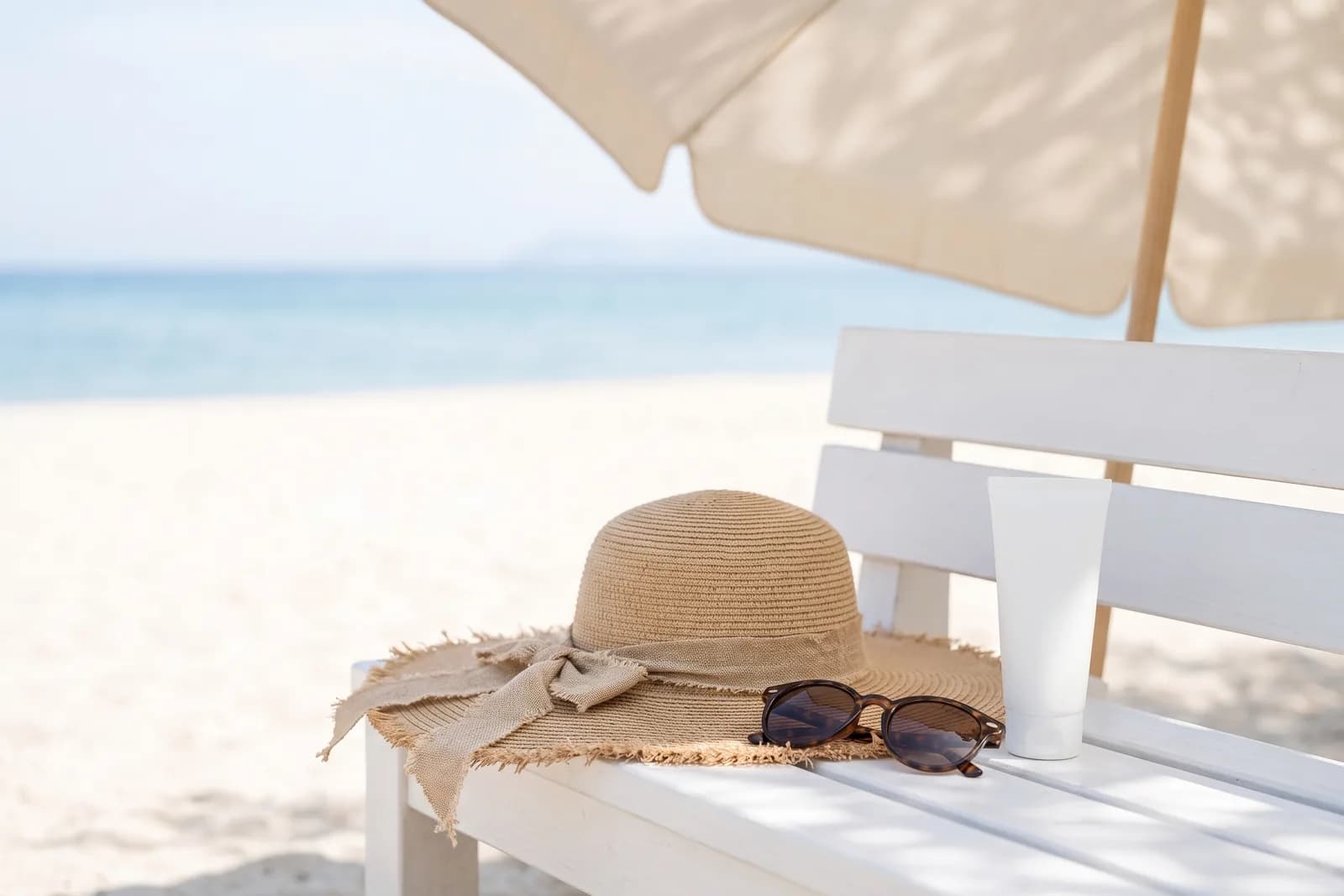
- choose a wide-brimmed hat that also shades the neck and ears
- wear sunglasses that filter ultraviolet light, to protect the eyes
- remember that sand, water and pale surfaces reflect part of the rays, even under an umbrella
- do not be fooled by hazy days: clouds let a good share of ultraviolet light through
Sunscreen: an addition, not a shield
Sunscreen adds to shade and clothing; it never replaces them. Choose a broad-spectrum product, which protects against both types of ultraviolet rays, with a high protection factor. A pharmacist or doctor can help you choose according to your skin.
Apply it generously about twenty minutes before going out, without forgetting the face, ears, neck and the tops of the feet and hands. Reapply roughly every two hours, and after every swim, heavy sweating or towelling off. A layer that is too thin protects far less than the label suggests.
Babies and children: shade comes first
Children’s skin is thinner and more sensitive, and sunburn in childhood matters for the health of the skin in adult life. Babies should not be exposed to direct sun: keep them in the shade and somewhere cool, dressed in light, covering clothes and a hat. For very young children, ask the paediatrician before using any sun product.
For older children the same rules apply: play in the shade during the hottest hours, a T-shirt for swimming, a hat and sunglasses suited to their age, and sunscreen reapplied regularly. Children copy adults, and a parent who protects themselves teaches more than any lecture.
Heat, drinking and sunburn
Heat brings risks of its own. Drink water regularly without waiting until you are thirsty, offer drinks often to children and older people, choose light meals and avoid physical effort in the hottest hours. Unusual tiredness, headache, nausea or very hot skin are signs to get somewhere cool quickly.
Mild sunburn can be soothed by getting out of the sun, cooling the skin with lukewarm water, drinking well and avoiding any further exposure until it has healed. It is better to see a doctor if the burn covers a large area, if blisters appear, if a baby or young child is affected, or if there is also fever, chills or a general feeling of being unwell.
Moles: watch for change
Most moles are harmless. What matters is knowing your own and noticing what changes. Dermatologists sum up the points to watch with five letters, A to E:
- A for asymmetry: the two halves of the mole do not match
- B for border: an edge that is irregular, blurred or notched
- C for colour: several shades in one mark, or an unusual colour
- D for diameter: a mark that is growing or looks clearly larger than the others
- E for evolution: any change in size, shape, colour or thickness, or itching or bleeding
These criteria are not for diagnosing yourself. They help you know what to show: any mole that is changing, or any new mark that appears in adulthood and looks unlike the others, deserves to be shown to a dermatologist.
Every skin, every setting, and a regular check
Darker skin tans more easily and burns less quickly, but it is not immune: it too is affected by the sun, and pigmented patches are common. Shade, clothing and sunscreen remain useful for everyone.
At the beach, water and sand increase exposure. In the mountains, cooler air hides the strength of the sun, even though its rays are more intense at altitude. In both settings, protection should be stepped up.
Finally, a yearly skin check by a dermatologist is worthwhile for people with many moles, very fair skin or a family history of skin cancer. At Clinique Sakina, a dermatology consultation can be booked for this check.
Remember
This article offers general information about sun protection. It does not replace a consultation and does not take your personal situation into account. For any question about your skin or your children’s, talk to your doctor.
General information: it does not replace your doctor’s advice.