The journey
Seven steps, from consultation to follow-up
Scroll on: each step tells you what to expect and what to have with you.
Step 17A few weeks before
The surgical consultation
The surgeon examines you, explains the proposed operation, its benefits and its constraints, and answers your questions without rushing.
What to expect
- A conversation about your history and your treatments
- Choosing the date and the type of stay
- A detailed quote, given on the spot or online
What to bring
- Your ID and your Chifa card
- Your current prescriptions
- Your recent tests and imaging
Step 27Two to three weeks before
Tests and the anaesthesia consultation
The anaesthetist sees you on the second floor, beside the operating block, chooses the most suitable anaesthesia with you and orders any tests needed.
What to expect
- A blood test at the ground-floor laboratory, if requested
- Sometimes an ECG or an X-ray
- Written instructions for the evening before and the day itself
What to bring
- A list of all your medicines, even occasional ones
- Any known allergies
- The completed anaesthesia questionnaire
Step 37The evening before or that morning
Admission
Reception checks your file and your cover, then a nurse takes you to your room and fits your identification wristband.
What to expect
- Signing the informed consent
- Paying the deposit or confirming third-party payment
- A last check of the fasting instructions
What to bring
- A light bag: pyjamas, slippers, toiletries
- Your glasses or hearing aids, with their cases
- No jewellery or valuables
Step 47On the day
The day of the operation
A porter walks with you to the operating block. The team introduce themselves, confirm your identity and the planned operation with you, then the anaesthetist takes over.
What to expect
- A spoken check at every stage, by the whole team
- A calm room at a comfortable temperature
- Your relative informed as soon as the operation ends
What to bring
- Nothing: your belongings stay locked in your room
- Dentures and contact lenses removed beforehand
Step 57Straight afterwards
The recovery room
You wake under the constant watch of a recovery nurse. Your comfort is assessed and any pain eased before you go back to your room.
What to expect
- Pulse, blood pressure and breathing monitored
- Pain assessed and relieved regularly
- Back to your room once everything is stable
What to bring
- Nothing: the team takes care of everything
Step 67That evening or after a few nights
Going home
The surgeon sees you before you leave. You go home with your report, your prescriptions and the date of your check-up, with someone to take you.
What to expect
- An operation report and a discharge letter
- Written instructions for home
- The final invoice, paid or sent to your fund or insurer
What to bring
- Someone to take you home
- Loose, comfortable clothes
Step 77The weeks that follow
Follow-up
A check-up is booked before you even leave, on site or by video depending on the operation. The team remains reachable if a question comes up.
What to expect
- A check on how the wound is healing
- Stitches removed if needed
- Advice on returning to work and sport
What to bring
- Your report and prescriptions
- Your questions, written down as they come
This journey describes common practice. Your surgeon and anaesthetist give you the instructions that apply to you.
Day surgery
Arrive in the morning, home by evening
When the operation allows, you do not spend the night at the clinic. A dedicated eight-place unit on the second floor looks after the day’s patients.
- Admission early in the morning, fasting as instructed
- A recliner or a bed in a quiet space near the block
- A call from the team the next day to see how you are
- A companion is required to take you home
| Operation | Package |
|---|---|
| Carpal tunnel release | DZD 60 000 |
| Cataract surgery | DZD 85 000 |
| Circumcision | DZD 25 000 |
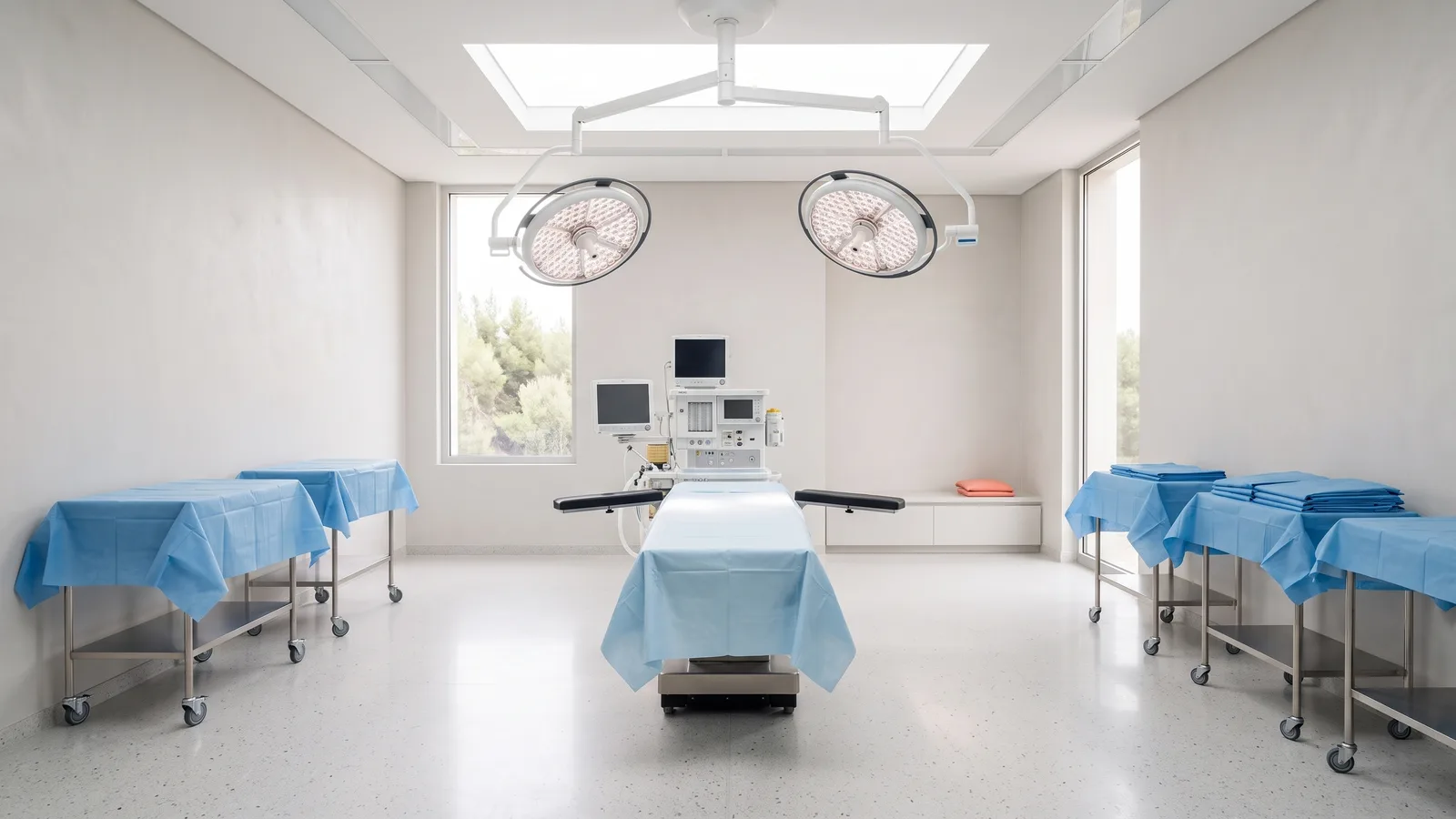
The operating block
A block designed for safety and calm
The block takes up the second floor, between the surgical consultations and the recovery room. Flows are kept apart: patients, sterile equipment and linen never cross.
Every operation follows a checklist read aloud before anaesthesia, before the incision and before leaving the theatre. It takes a moment, and it is the moment that prevents mistakes.
- Operating theatres
- 4
- Day-surgery places
- 8
- Operating list
- Saturday to Thursday, 08:00–16:00
- Surgical emergencies
- 24 hours a day
Rooms and comfort
A room where you can really rest
Three categories of room, each with its own shower room, a medical bed, a nurse call and a window onto the garden or the olive trees.
Shared room
Night on a medical ward
DZD 9 000per night
Single room
Night on a medical ward
DZD 15 000per night
Suite
Night on a medical ward
DZD 25 000per night
A bed for the person with you
In a single room or a suite, a relative may sleep beside you. The extra bed and breakfast are charged per night.
DZD 3 000per night
- Wi-fi and television in every room
- Meals suited to your diet, served in your room
- A personal safe and a lockable wardrobe
- Quiet nights: care grouped together, lights dimmed
Packages
Surgery packages
A package brings together the surgeon’s fees, anaesthesia, the theatre, a stay in a shared room and the usual consumables. A single room or a suite adds a supplement per night.
| Operation | Specialty | Stay | Package | Deposit |
|---|---|---|---|---|
| Laparoscopic appendicectomy | General surgery | 2 nights | DZD 120 000 | DZD 48 000 |
| Laparoscopic cholecystectomy | General surgery | 2 nights | DZD 160 000 | DZD 64 000 |
| Inguinal hernia repair | General surgery | 1 night | DZD 90 000 | DZD 36 000 |
| Haemorrhoidectomy | General surgery | 1 night | DZD 80 000 | DZD 32 000 |
| ACL reconstruction | Orthopaedics & trauma | 2 nights | DZD 280 000 | DZD 112 000 |
| Knee arthroscopy | Orthopaedics & trauma | 1 night | DZD 150 000 | DZD 60 000 |
| Carpal tunnel release | Orthopaedics & trauma | Day case, no overnight stay | DZD 60 000 | DZD 24 000 |
| Cataract surgery | Ophthalmology | Day case, no overnight stay | DZD 85 000 | DZD 34 000 |
| Tonsillectomy | Ear, nose & throat | 1 night | DZD 70 000 | DZD 28 000 |
| Circumcision | Urology | Day case, no overnight stay | DZD 25 000 | DZD 10 000 |
| Transurethral resection of the prostate | Urology | 3 nights | DZD 200 000 | DZD 80 000 |
| Hysterectomy | Obstetrics & gynaecology | 3 nights | DZD 220 000 | DZD 88 000 |
Included: surgeon, anaesthesia, theatre, shared room, nursing care, meals and routine consumables.
Not included: room supplement, companion bed, unforeseen additional tests and medicines to take home. Single room: DZD 6 000 per night · Suite: DZD 15 000 per night
Indicative prices as of , subject to change.