 Fictional character
How we see you
The orthopaedic surgeons see patients on the second floor, in wing C, next to the operating theatres and the anaesthetic clinic. Being so close makes things simpler: when an operation is being considered, the anaesthetic assessment can often happen the same day, at the end of the corridor, and you meet the team who will look after you during and after surgery before the day itself.
Most appointments, however, do not lead to an operation. A sprain, tendinitis or back pain that lingers is first managed through examination, explanation and a follow-up plan. X-rays are taken on the ground floor, often during the same visit, and an MRI is booked there when it is needed; the surgeon then goes through the images with you on screen.
After a fracture or an operation, check-ups are planned in advance and appear in your patient space, together with the reports, the images and written instructions. If physiotherapy is planned, you can pass the report straight to the physiotherapist of your choice, and the surgeon stays reachable through the clinic to review how things are going.
People often come for…
A few common reasons, put the way patients put them. They help you find the right door; they say nothing about what you have.
- Sprain or sports injury
- Knee pain
- Shoulder pain
- Back pain that lasts
- Fracture follow-up
- Tingling in the hand
What we examine and take care of
Every situation is different: the consultation, and only the consultation, decides what comes next.
Sprains and sports injuries
Ankle, knee or shoulder: the examination assesses the ligaments and helps you prepare a return to activity.
Joint pain
A knee, hip or shoulder that has hurt for weeks, examined with the images to hand.
Back and neck
Pain that lasts, with an examination of the spine and, if needed, an X-ray or an MRI.
Fractures and their follow-up
From immobilisation to checking that the bone has healed, with an X-ray at each stage where it is useful.
Hand and wrist
Tingling, fingers that catch, wrist pain, examined in detail.
Tests, on site
The tests this specialty asks for most often are done here, without changing address.
A first consultation, step by step
Arriving on the second floor
The lift takes you to the second floor, where the wing C reception checks your file and any images you bring.
What happened
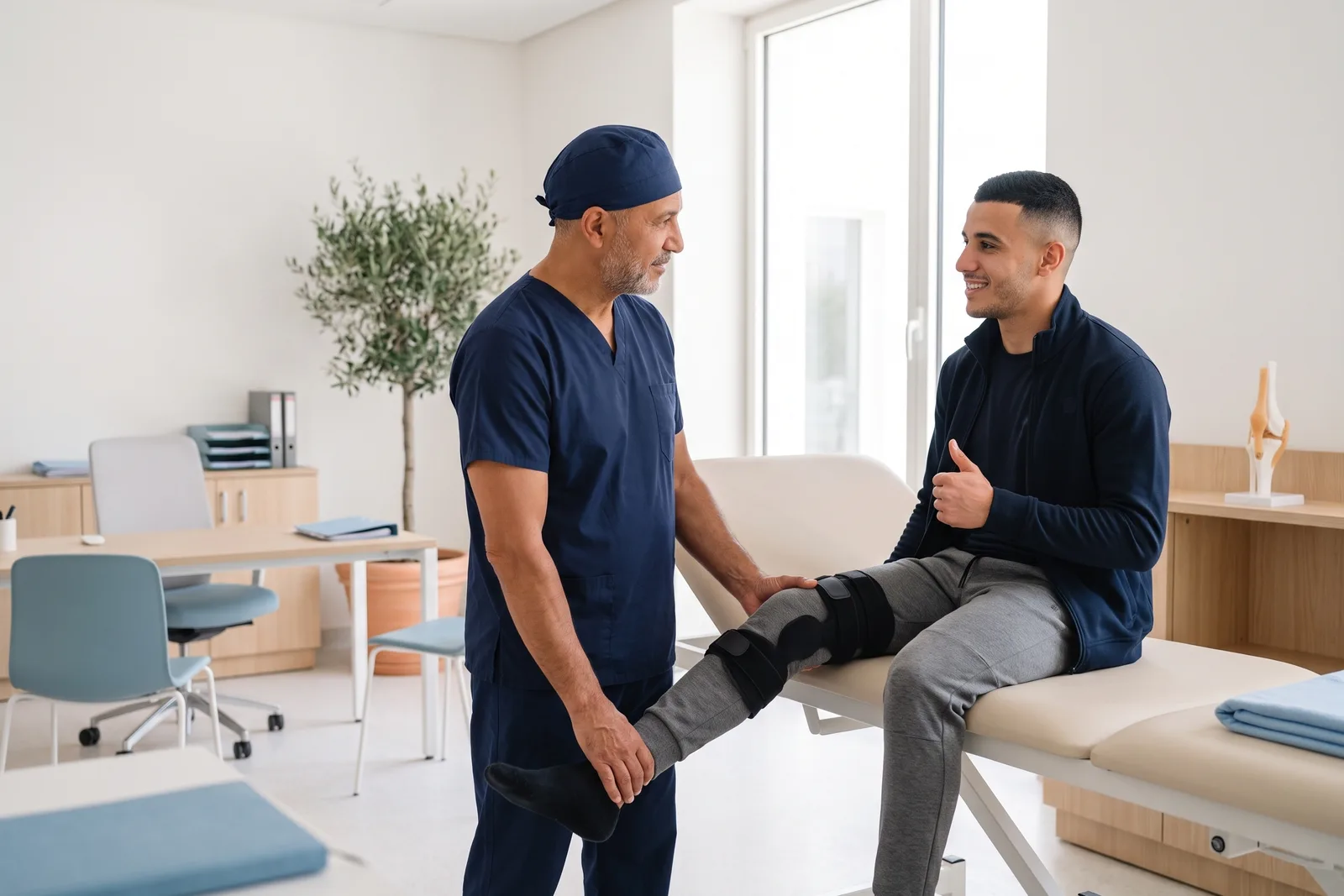
The surgeon asks how the pain or injury began, what eases it and what it stops you doing day to day.
The examination
They watch you walk and assess the joint’s movement and strength, always comparing it with the side that is fine.
Images and next steps
An X-ray can be taken on the ground floor during the visit; the care plan is recorded in your patient space.
What to bring
- Your X-rays, CT or MRI scans, with the discs or access codes
- Reports from any operation or emergency visit
- A list of your current treatments
- Clothing that makes the joint concerned easy to uncover
Where to find us
Consultations take place on the second floor, wing C.
fourth floor — not on your routethird floor — not on your route
- From
- Main entrance
- To
- Room 201 — orthopaedics
About 97 m on footFloors on the way: ground floor, first floor, second floor
The steps, in order
- Starting point: Main entrance.
- Carry on straight for about 50 m.
- Take lift A to the second floor.
- Carry on straight for about 5 m.
- Turn right.
- Carry on straight for about 40 m.
- Room 201 — orthopaedics is on your right.
The doctors
Each doctor’s next free slot, worked out just now. Book the one that suits you directly.
2 doctors available
Looking for appointments…
- Fictional character
On site only
By teleconsultation
Orthopaedics is seen on site only: examining a joint relies on the surgeon’s hands and on watching you walk and move, which a camera cannot do. Your images and reports remain available remotely in your patient space.
Common questions
Do I need a referral to book?
No, you can book directly. An MRI or CT scan, on the other hand, needs a doctor’s request: if you do not have one yet and the scan would help, the surgeon writes it during the appointment, and you can book the scan straight afterwards.
Will I definitely need an operation?
No. Most appointments lead to follow-up without surgery. When an operation is being considered, the surgeon explains why, what it involves and what the alternatives are, then gives you time to decide. Asking for a second opinion is always possible.
How long is the wait for an appointment?
Each surgeon’s next free slot is shown live on this page. After a sprain or fracture already seen in the emergency department, reception tries to offer an early check-up, so mention it when you book.
Can someone come with me?
Yes, and it is a good idea if walking is difficult or if an operation is going to be discussed. The lift serves the second floor, and wheelchairs are available at the ground-floor reception.