How we see you
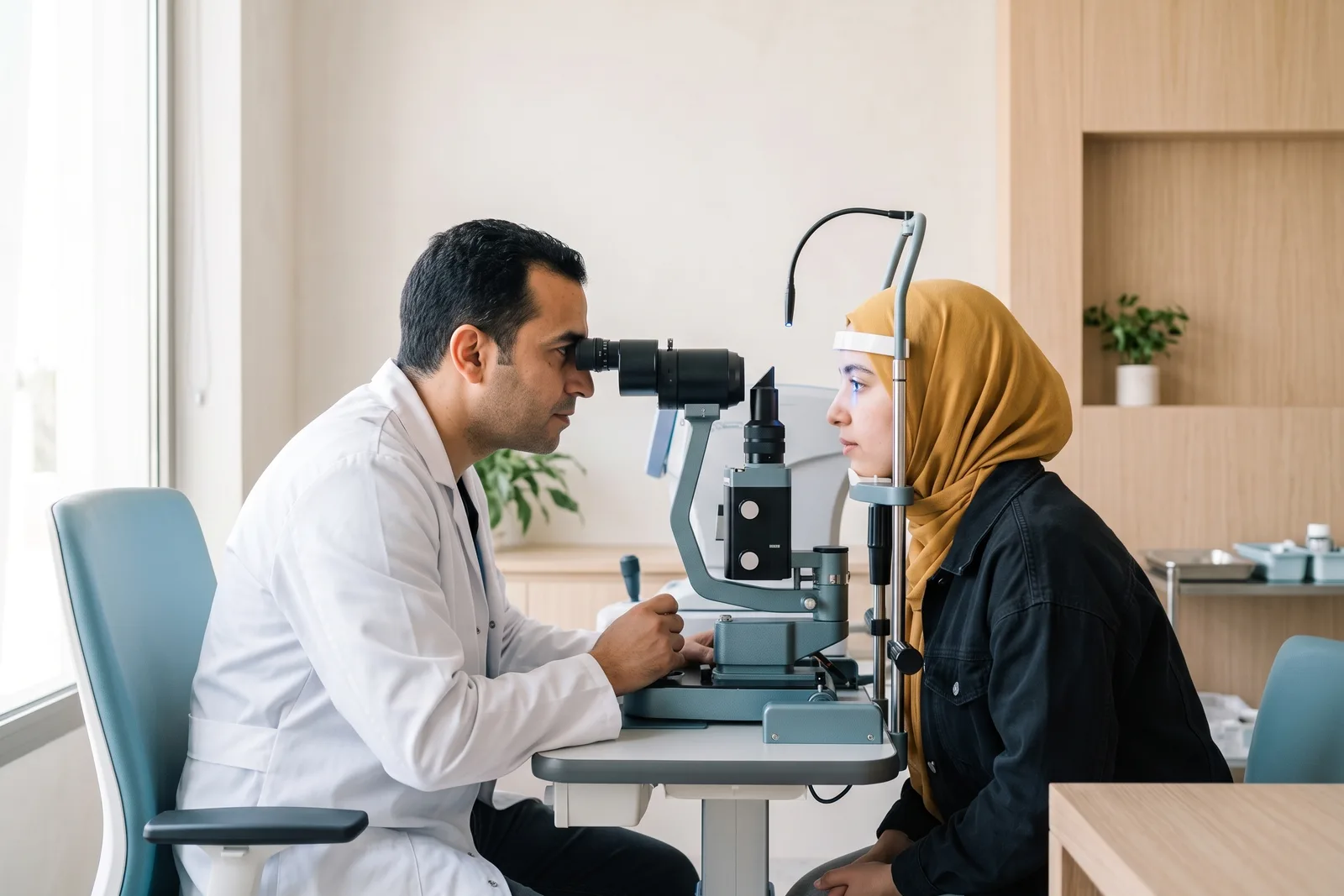
An ophthalmology appointment takes place on the first floor, in wing B, in several stages. An orthoptist or a nurse first measures your vision, near and far, along with the pressure in your eye. The doctor then examines each part of the eye with the slit lamp, from the cornea to the retina, and explains what they see as they go, without jargon.
To look at the back of the eye, particularly for people with diabetes, the doctor often uses drops that dilate the pupil. They need a short wait before the examination and leave your vision blurred and sensitive to light for a few hours: do not plan to drive afterwards, come with someone or by taxi, and bring your sunglasses.
The report, your vision measurements and a glasses prescription, if one is needed, are published in your patient space. For diabetes follow-up, the ophthalmologist works with the endocrinologist on the same floor: the blood sugar and HbA1c results from the laboratory are shared, and regular check-ups are reminded in advance.
People often come for…
A few common reasons, put the way patients put them. They help you find the right door; they say nothing about what you have.
- Blurred or reduced vision
- A child’s eye test
- Eye check for diabetes
- Red or itchy eye
- Cataract
- New glasses prescription
What we examine and take care of
Every situation is different: the consultation, and only the consultation, decides what comes next.
Measuring your vision
Short sight, age-related long sight, astigmatism: a precise measurement and, if needed, a glasses prescription.
Children’s eyes
Age-appropriate screening to pick up a vision problem or a squint.
Retinal checks and diabetes
A regular examination of the retina, linked with your diabetes follow-up.
Red or irritated eyes
Redness, itching, a gritty feeling: the slit-lamp examination pins down where it comes from.
Cataract
Assessing how it affects daily life and, when surgery is being considered, preparing for it.
Tests, on site
The tests this specialty asks for most often are done here, without changing address.
Laboratory
A first consultation, step by step
Arrival
At the wing B reception we open your file; let us know if you came by car, in case dilating drops turn out to be useful.
Initial measurements
Your distance and near vision, then the pressure in your eye, are measured before you see the doctor.
The examination
The doctor examines the eye with the slit lamp; drops may be used to dilate the pupil and look at the back of the eye.
Prescription and report
Your glasses prescription and the report are available in your patient space as soon as the appointment ends.
What to bring
- Your current glasses, and your contact lenses in their case if you wear them
- Previous glasses prescriptions and reports
- Your latest blood sugar results, if you have diabetes
- Sunglasses for the journey home
Where to find us
Consultations take place on the first floor, wing B.
fourth floor — not on your routethird floor — not on your routesecond floor — not on your route
- From
- Main entrance
- To
- Room 129 — ophthalmology
About 77 m on footFloors on the way: ground floor, first floor
The steps, in order
- Starting point: Main entrance.
- Carry on straight for about 50 m.
- Take lift A to the first floor.
- Carry on straight for about 5 m.
- Turn left.
- Carry on straight for about 20 m.
- Room 129 — ophthalmology is on your right.
The doctors
Each doctor’s next free slot, worked out just now. Book the one that suits you directly.
2 doctors available
Looking for appointments…
On site only
By teleconsultation
Ophthalmology is seen on site only: measuring your vision, examining the eye with the slit lamp and looking at the retina all need the equipment in the consulting room. Your prescriptions and reports remain available remotely in your patient space.
Common questions
Can I drive after the appointment?
Not if you have had drops to dilate your pupils: your vision stays blurred and dazzled for a few hours. Come with someone, by taxi or by public transport, and bring sunglasses. Without dilating drops, you can drive as usual.
Should I take my contact lenses out before coming?
It is best to come in your glasses and not wear your lenses on the day, as they can affect the vision measurement. Do bring them in their case all the same: the doctor may want to look at them.
Can my child be examined if they cannot read yet?
Yes. The tests are suited to their age, using pictures and shapes rather than letters, and the youngest are examined on a parent’s lap. Dilating drops are sometimes useful for children too; the doctor will tell you beforehand.
Which languages do the doctors speak?
Appointments are held in French and Arabic, and some doctors also speak Kabyle or English. Eye tests do not require you to read French: Latin letters, Arabic letters, numbers or pictures are offered, whichever suits you.