Packing a parcel that arrives whole
Between your table and your customer’s door, a parcel is lifted, set down, sorted, stacked and shaken about ten times. Here is how to pack it so it arrives the way it left, without paying more than you need to.
Published 16 September 2026
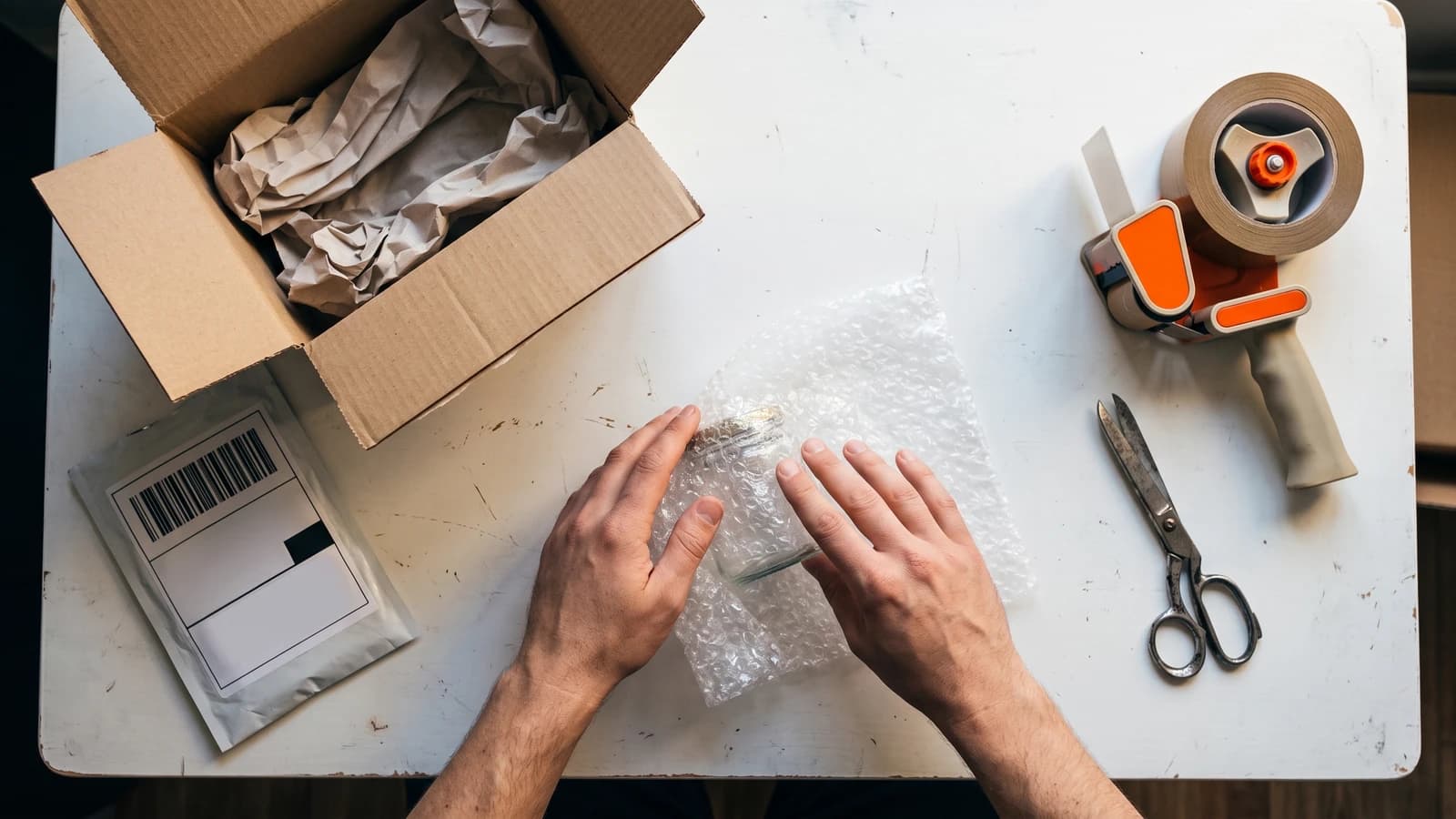
What a parcel goes through
Follow an ordinary parcel from Algiers to Constantine. The pick-up courier collects it from you and puts it in the van. At the hub it is unloaded, scanned, placed on a belt, sorted by wilaya and slipped into a bag. The bag travels overnight in a semi-trailer, vibrating for hours under other bags. At the destination hub it all happens again, and the parcel ends up in a scooter’s top box riding over cobbles.
None of this is rough, but it all adds up. Packing that survives one handling does not survive ten. The right question is not « is the box strong? » but « can the contents move inside it? ».
Choosing the right box
Use a new box sized to the product, with no more than a few centimetres of space around it. A box that is too big costs you twice: it gets crushed under other parcels, and it is charged at its volumetric weight, worked out from its dimensions, when that exceeds the real weight.
For a heavy product or a stack of clothes, choose double-wall board. Avoid second-hand boxes that still carry an old label or barcode: a hub scanner may read the wrong one. A very large parcel, over 100 cm on one side, no longer fits a top box or a belt and pays a surcharge.
Void fill is what matters
The product must not touch any wall. Lay a layer of fill on the bottom, place the item in the centre, fill every gap on the sides and on top, then close. Crumpled paper, loose fill or cut cardboard all work; bubble wrap is for what breaks.
Test before you seal: shake the box gently. If you hear or feel anything move, add fill. With several items in one parcel, keep them apart, especially when glass and metal travel together.
- A layer at the bottom, the item in the middle, fill all round.
- Glass wrapped on its own, in two turns of bubble wrap.
- The shake test before sealing.
Seal it with an H
Use 50 mm packing tape in an H: one strip along the centre seam, then one across each edge. Do the same underneath. A single strip down the middle lets the flaps open as soon as the parcel is lifted by a corner.
Avoid string, office tape and cling film around the box: they catch in the hub’s belts and hide the label. A soft mailer is fine for a folded garment, as long as it is closed with its own adhesive strip, not a knot.
Liquids, creams and perfume
Cosmetics are among the most shipped products, and the most often damaged. Before packing, seal every cap with film or tape, then put each bottle in a closed bag. If a bottle leaks, it only soils its own bag, not the whole parcel or the ones travelling with it.
« This way up » arrows are respected as far as possible, but they are no guarantee inside a sorting bag. Pack as if the parcel may travel on its side. For perfume in a glass bottle, the void fill matters more than the arrow.
The label, in plain sight
One label, stuck flat on the largest face, with no crease over the barcode. Do not frame the label with shiny tape: it reflects light and the scanner struggles. If you reuse a box, tear off or strike out every old label.
The label carries the sorting code in large type, which the agent reads at arm’s length, the barcode, the recipient’s landmark and the amount to collect. An unreadable label means a parcel set aside to be identified by hand, and a day lost.
Clothes and shoes
A folded garment travels well in a soft mailer, provided it is folded around a thin card so it does not crumple into a ball. Shoes stay in their box, and the box goes inside a shipping carton: a shoebox on its own is not made for a sorting bag and opens at the first knock.
Do not mix a perfume or a cream with clothes in the same parcel: one leak stains everything. And if you sell several sizes, write the size on the inner bag. For an exchange, the courier and your customer can check at a glance that it is the right item.
Options that protect
The fragile option, at 150 DZD, sends the parcel through separate handling: it is sorted by hand and placed on top of the bags rather than underneath. It is worth it for glass, ceramics and electronics, but it does not replace good void fill.
Insurance, at 1% of the declared value, covers loss and breakage in transit. For a valuable product it costs less than a refund. And open before paying reassures the customer who wants to check the order’s condition in front of the courier.
Read next
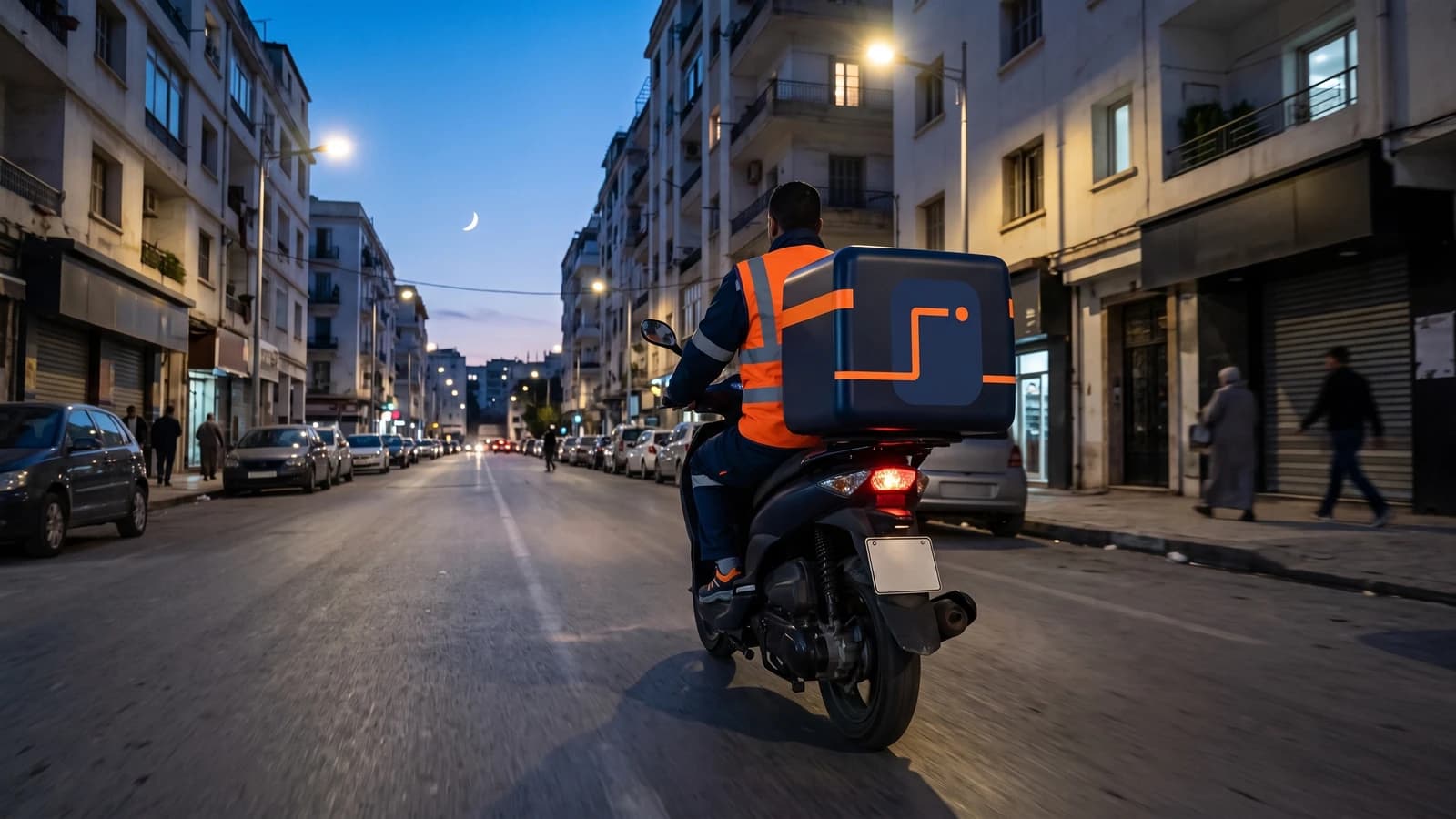
Delivering during Ramadan: hours, iftar and time slots
The holy month moves orders to the evening and shortens the delivery day. Here is how to organise your shipments so customers get their parcels on time, without your couriers racing the clock before iftar.
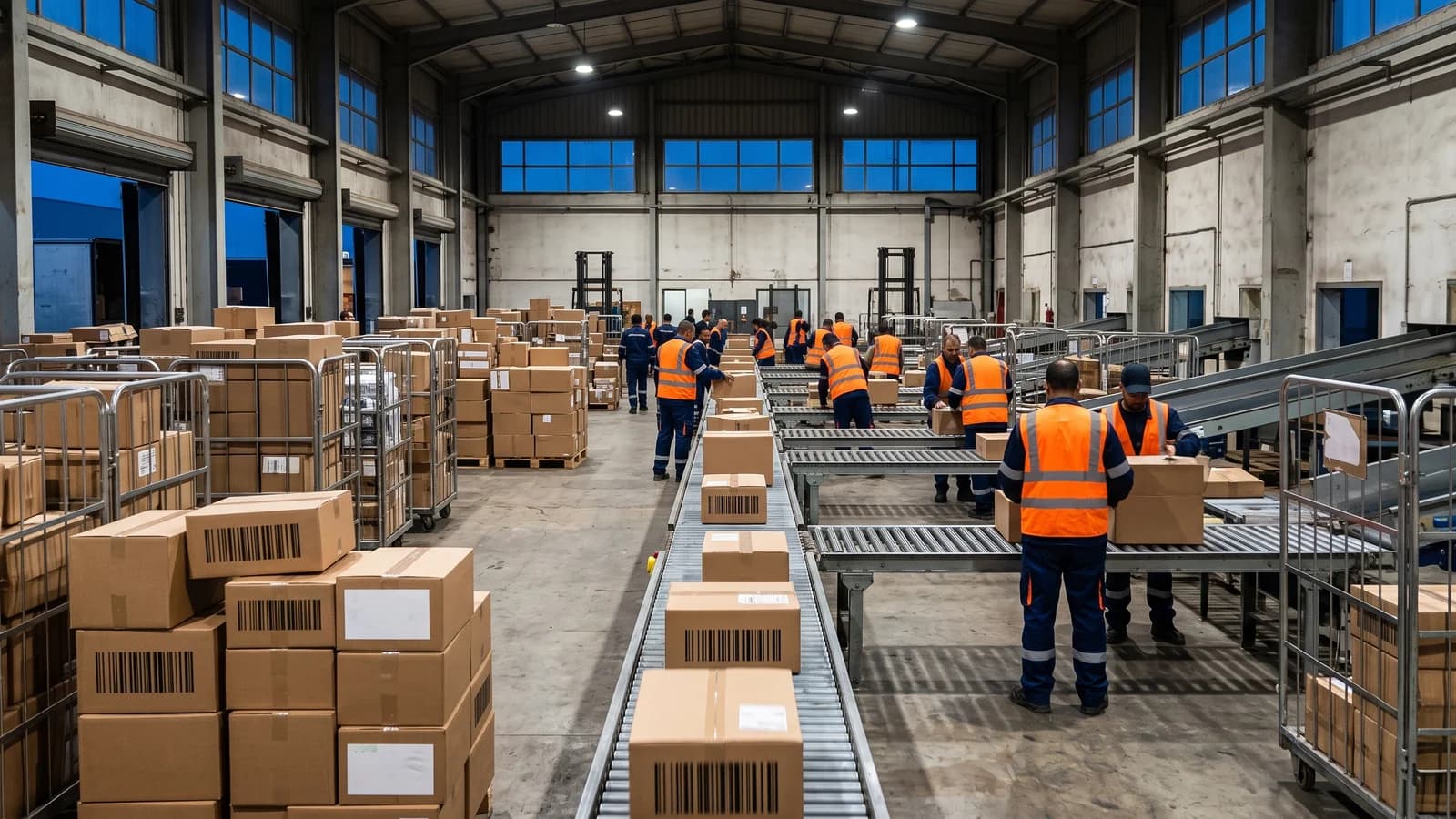
The Eid peak: ten days to prepare for sharply higher volumes
Before each Eid the network handles far more parcels in ten days than usual. The sellers who come through best decided everything three weeks ahead: stock, order cut-off, pick-ups and the message to customers.