The house
One workshop, two benchworkers, one edger.
Gouraya Optical assembles its frames and cuts its lenses in the same room, facing the bay. That is not a matter of principle: it is what lets us telephone a customer before cutting a lens rather than after.


What we do ourselves
Assembly, edging, fitting and repair. A frame that reaches you has been worn by somebody in the workshop for a minute, pads opened, temples set.
Prescription lenses up to index 1.67 are cut here. Above that we send the work out, and we say so on the page, with the delay it adds.
The workshop, week by week
Open Sunday to Thursday, 9 to 6, and Saturday morning. Closed on Friday.
Orders are collected at the counter without an appointment. If you are coming for an adjustment, bring the frame: we do not charge for setting a pair we assembled.
The town
Under the cape, facing the bay.
Gouraya is the cape above the town; the shop is named after it because we can see it from the workshop, through the window over the bench. The frames take the names of the villages around it: Tichy, Aokas, Amizour, the Soummam.
The light on the bay is hard in summer and low in winter. It is why we suggest a polarised lens to anyone who drives the coast road, and why every pair is checked at the window, not only under the lamp.

The bay at dusk.Photograph Walid Amghar · Unsplash 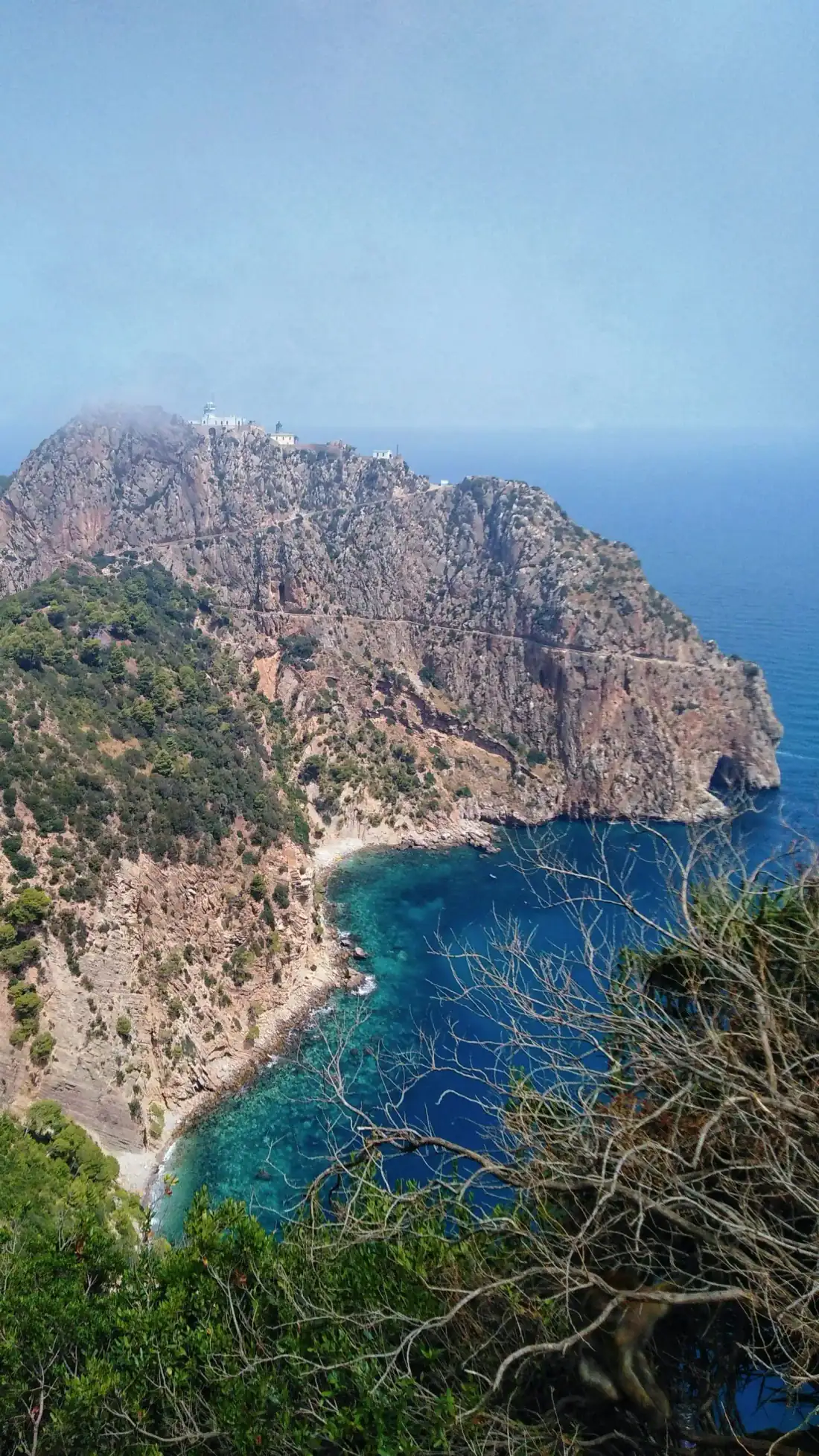
Cap Carbon, west of the town.Photograph Halima Bouchouicha · Unsplash 
Boats in the harbour, in the morning.Photograph Rafik Fella · Unsplash 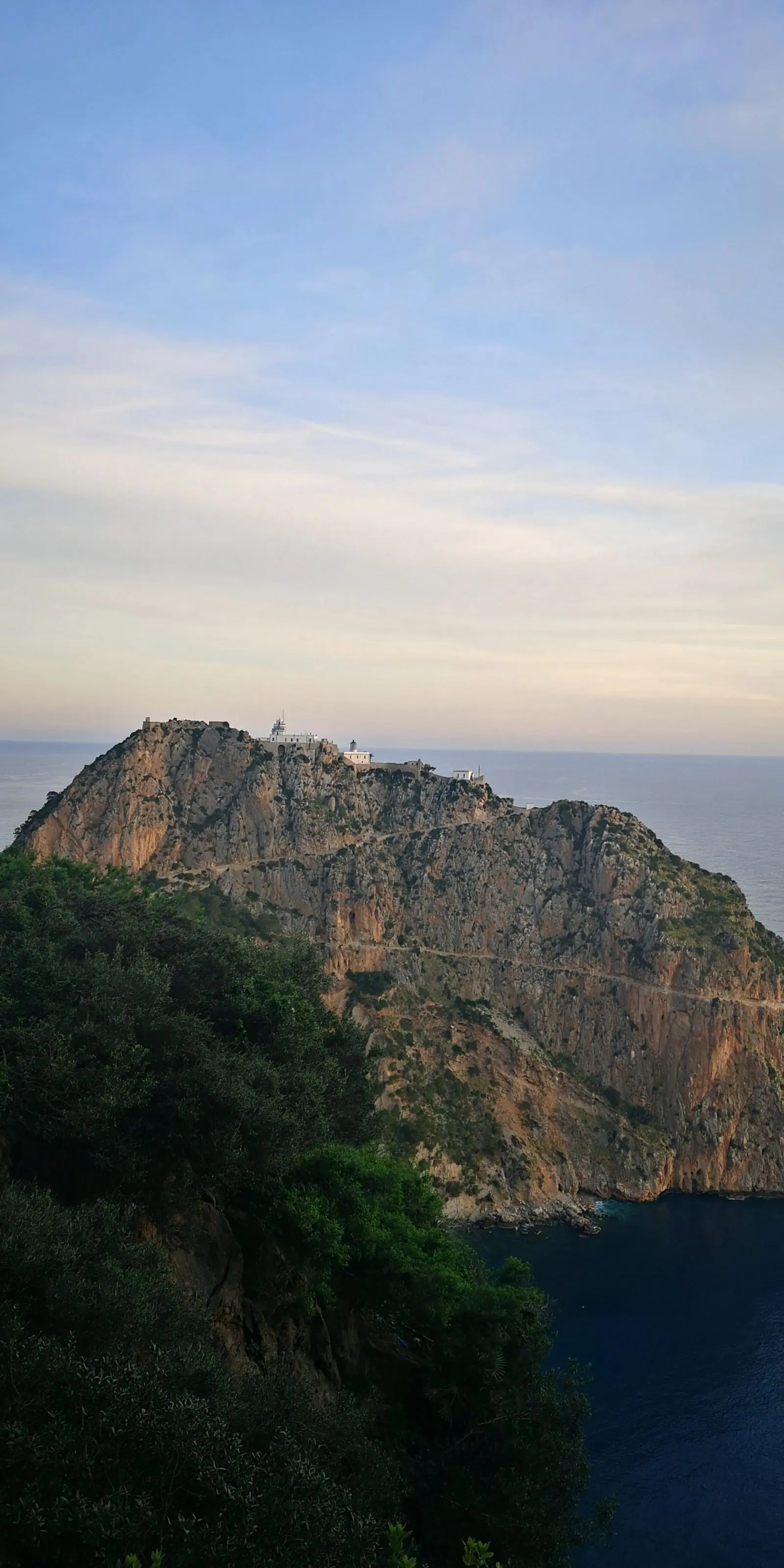
The Cap Carbon lighthouse.Photograph Kyser Sosi · Unsplash


Two stations
One reads, the other cuts.
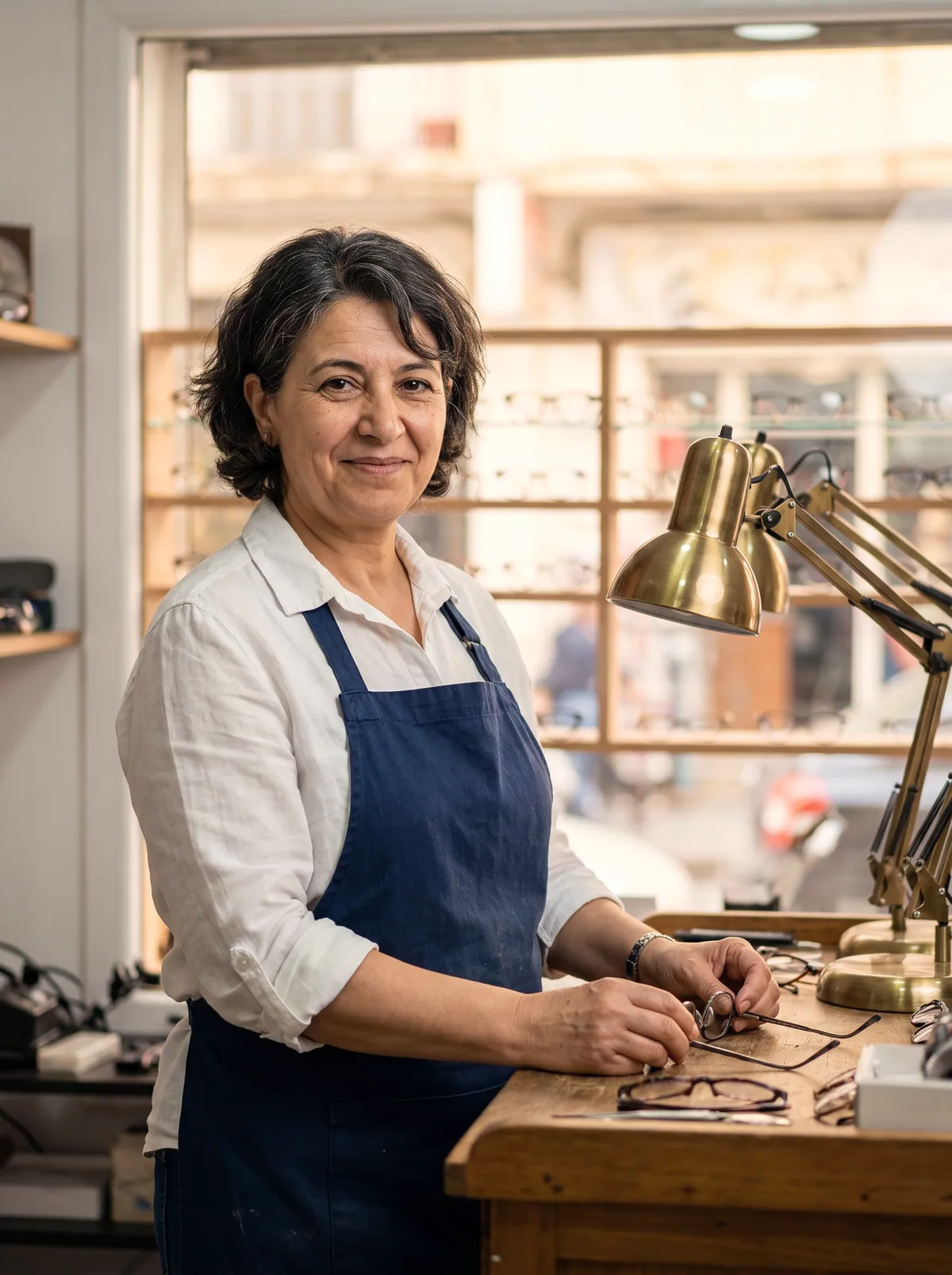
The optician who checks your prescription
She reads every prescription before a lens is ordered, and she is the one who calls when an axis is missing.
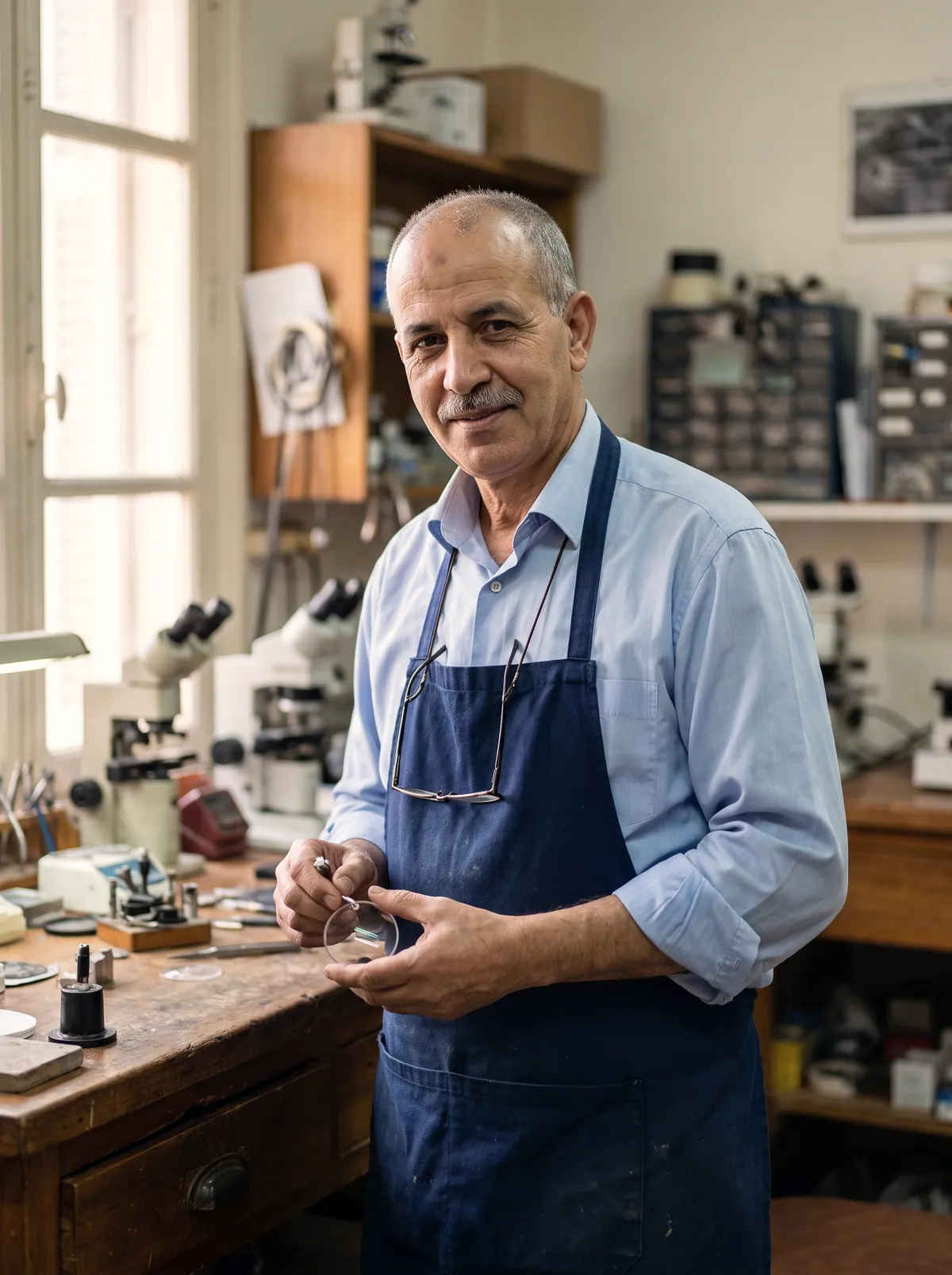
The optician at the edger
He traces, cuts and mounts. A lens that will not go in without forcing goes back to the wheel, not into the frame.


They are not named: the shop is invented for the demonstration, and we do not lend a name to a face.
The bench
Four machines, and the step we never skip.
The tracer
A stylus runs round the groove of the frame you chose, point by point, and takes from it the exact shape of the lens to cut.
Never skippedEvery frame is traced, even the second of the same model: no two acetate rims are ever quite the same.
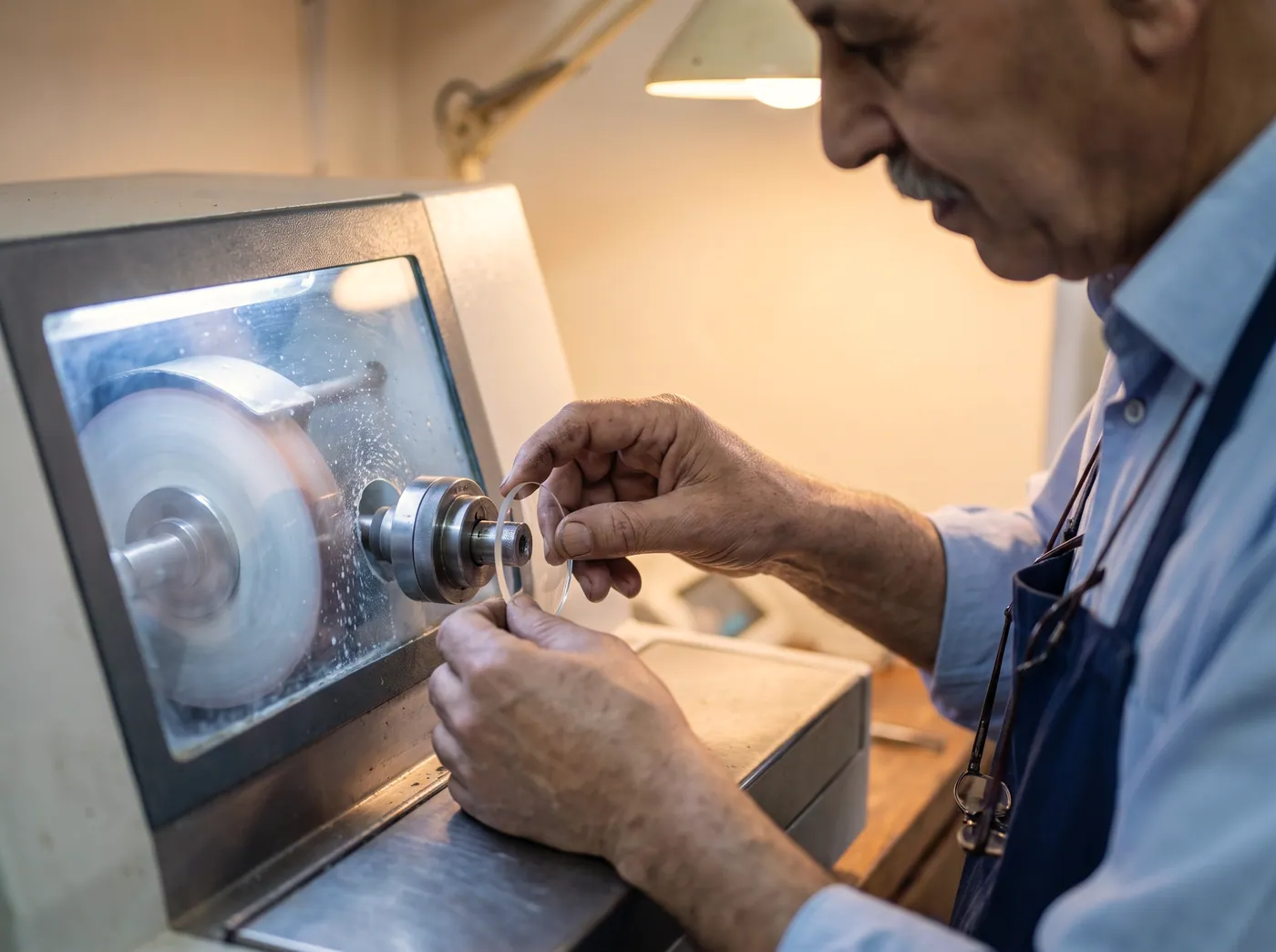
The edger
It cuts the blank down to the traced shape under a trickle of water, then grinds the bevel on the edge that will hold the lens.
Never skippedA lens that is too big is never forced into its rim: it goes back to the wheel.

The lensmeter
It reads back the power actually cut into each lens and where its optical centre sits.
Never skippedNo pair leaves without that reading, compared line by line with the prescription.
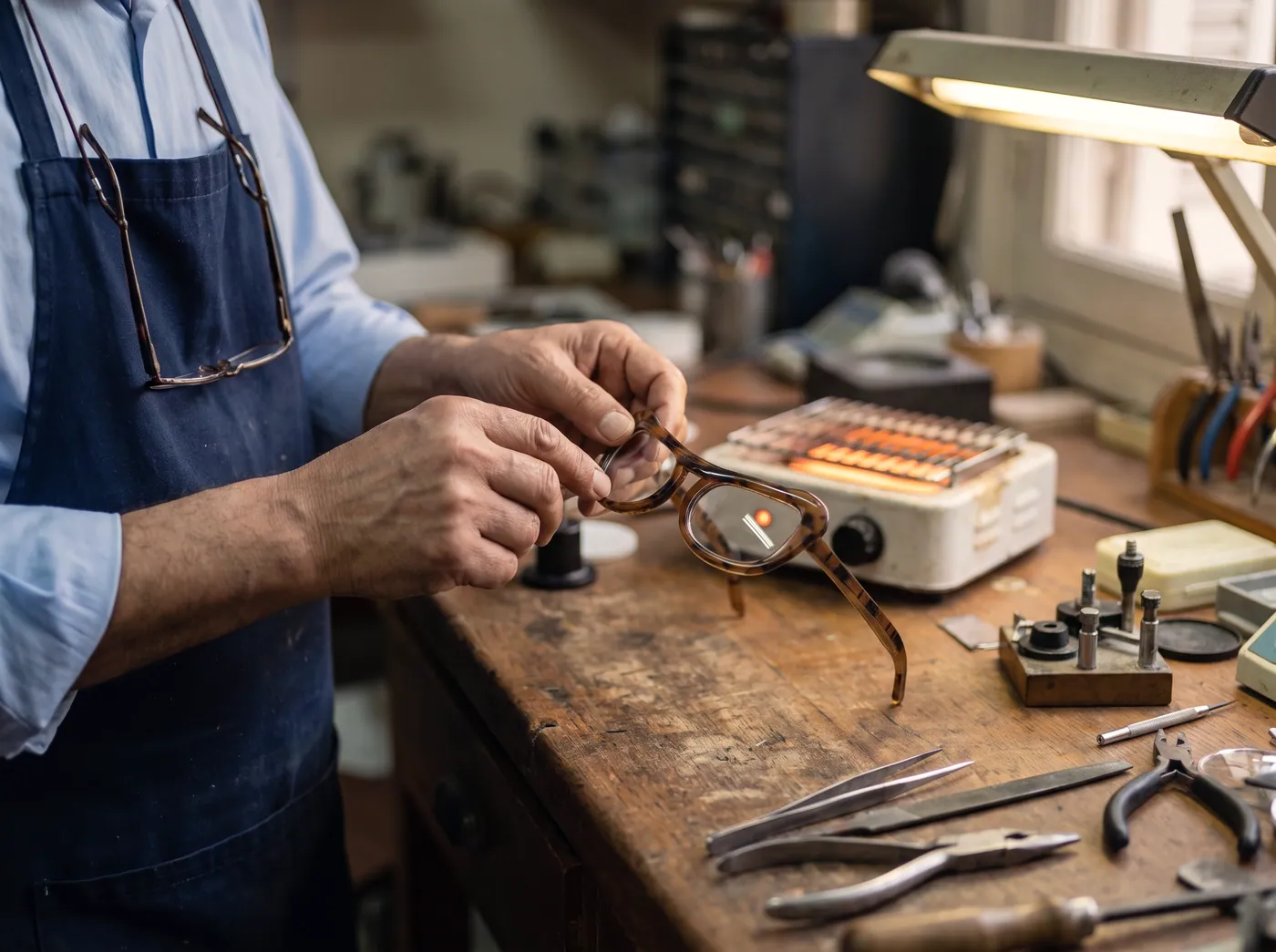
The mounting bench
The acetate is warmed until it gives, the lens clicks into the rim, the temples are set by hand.
Never skippedEvery pair is worn for a minute by someone from the workshop before it is packed.


The journey of a lens
From blank to case, in seven moves.
Scroll, or pick a step.
A round disc of lens, larger than any frame’s rim, already at the prescription’s power.
The tracer follows the groove of your frame and records its shape.
The wheel brings the blank down to that shape, under water, to a tenth of a millimetre.
A V-shaped ridge ground on the edge: it is what holds the lens in the frame.
The acetate is warmed, the lens clicked in, the temples set by hand.
The lensmeter reads back the power and centre of each lens against the prescription.
The pair is wiped, worn for a minute, then packed with its cloth.
Under the lamp
What we refuse to do
We do not sell progressive lenses by post. Pupil height is measured on the face, in the chosen frame; estimating it produces a lens you will not tolerate and that we will refuse to charge you for twice.
We do not guess at an incomplete prescription. If an axis or a pupillary distance is missing, we telephone. An optician who fills in the gap alone is rarely wrong — and when he is, you are the one wearing the mistake for a year.
We do not test eyes. That is the ophthalmologist’s work, and a shop that claims to replace it costs you the appointment that would have found something else.
These three refusals are the demonstration’s too: the shop calls rather than guesses, and says so.