A roof terrace protects everything below it, and it works harder than any other part of the house: fifty degrees on the slab on an August afternoon, cold December rain, blown sand in between. A well-laid bitumen waterproofing lasts fifteen to twenty years, and it rarely gives warning before it fails.
The right time to redo it is late spring: the deck is dry, the days are long and the membrane welds cleanly without July’s heat softening it underfoot. This guide sets out the two-layer method Qarmoud Atelier uses, and the spots where a leak is almost always born.
The signs it is time
On the top-floor ceiling: yellow rings, blistering paint, a damp smell after rain. On the roof: puddles that stay more than two days, membrane peeling away along the parapets, cracks in the protection, weeds growing in the joints.
A leak in the ceiling is not necessarily right above it. Water gets in at an upstand or an outlet, travels under the old membrane and comes out at the lowest point. That is why waterproofing is not patched: the whole system is redone, or at least a full area bounded by joints.
Falls and outlets
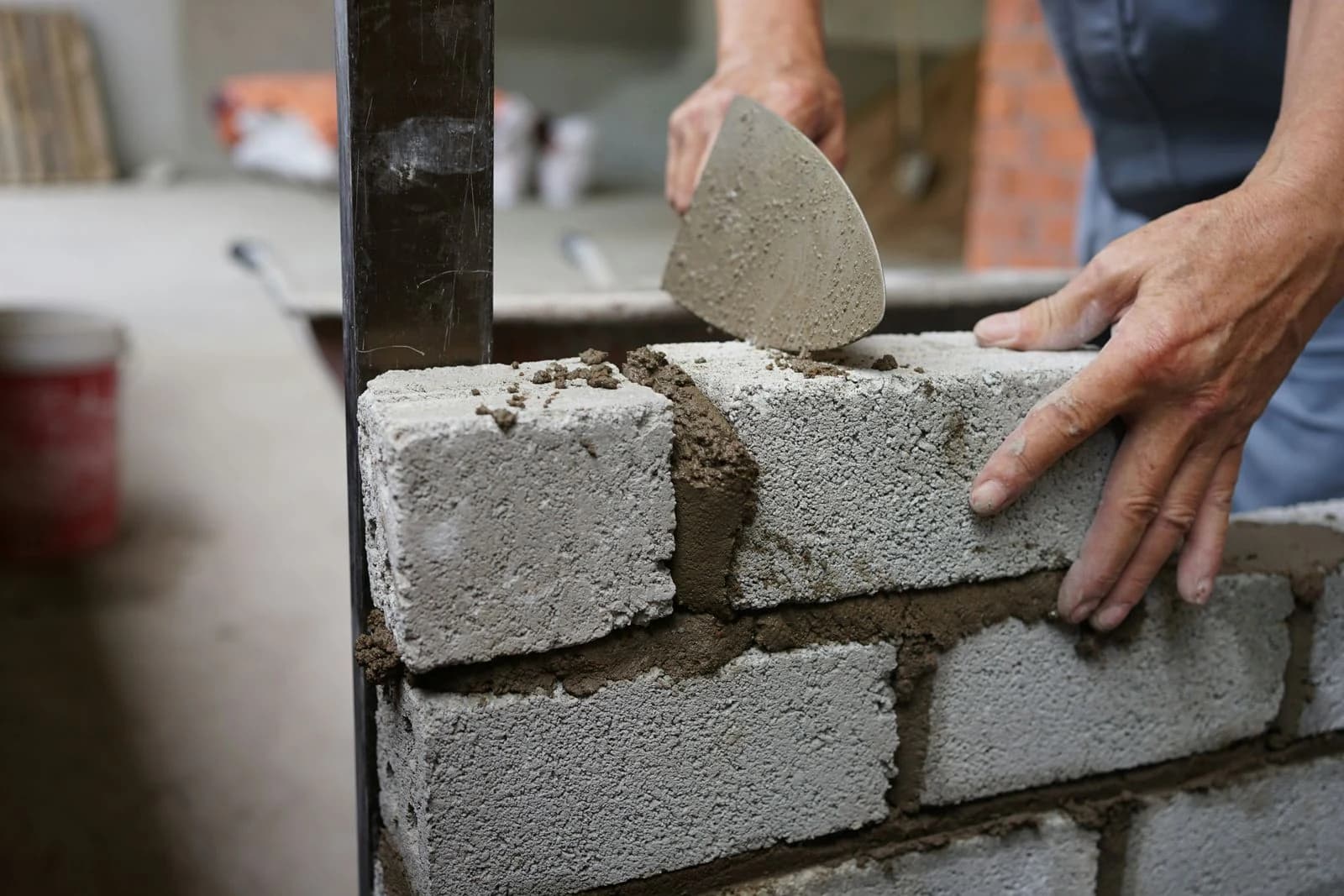
A roof must shed water, not hold it. Allow a fall of 1.5 to 2% towards the outlets — 1.5 to 2 cm per metre. If the old screed has sagged, it is re-laid in mortar before the waterproofing, and it is the moment to clear the downpipes and replace their outlet grilles.
How many rolls?
A roll of membrane covers 10 m² on paper. With 10 cm side laps and 15 cm end laps, it really covers a little under 9. A two-layer 80 m² roof therefore needs about 19 rolls for the surface, plus the alu-faced felt for the upstands: the perimeter times the upstand height, with the same margin. The waterproofing calculator does this sum for your dimensions, primer included (about 0.3 litre per m²).
What not to do
Do not weld onto a damp deck: trapped water turns to vapour in the first sun and balloons the membrane. Do not forget the upstands: a membrane laid flat without turning up the parapet lets water in at the first corner. Do not pierce the waterproofing afterwards to fix an aerial or a water tank: every hole is a leak waiting to happen.
And do not leave a membrane bare in the sun: its top face must be protected — a mineral-surfaced cap sheet, a reflective paint or bonded tiles — or ultraviolet light dries it out in a few summers.
Step by step
Indicative time: three days
Strip and clean
Remove the old protection and any loose membrane down to a sound deck, sweep, brush off moss and leave it to dry for at least two days of fine weather.
Repair the deck
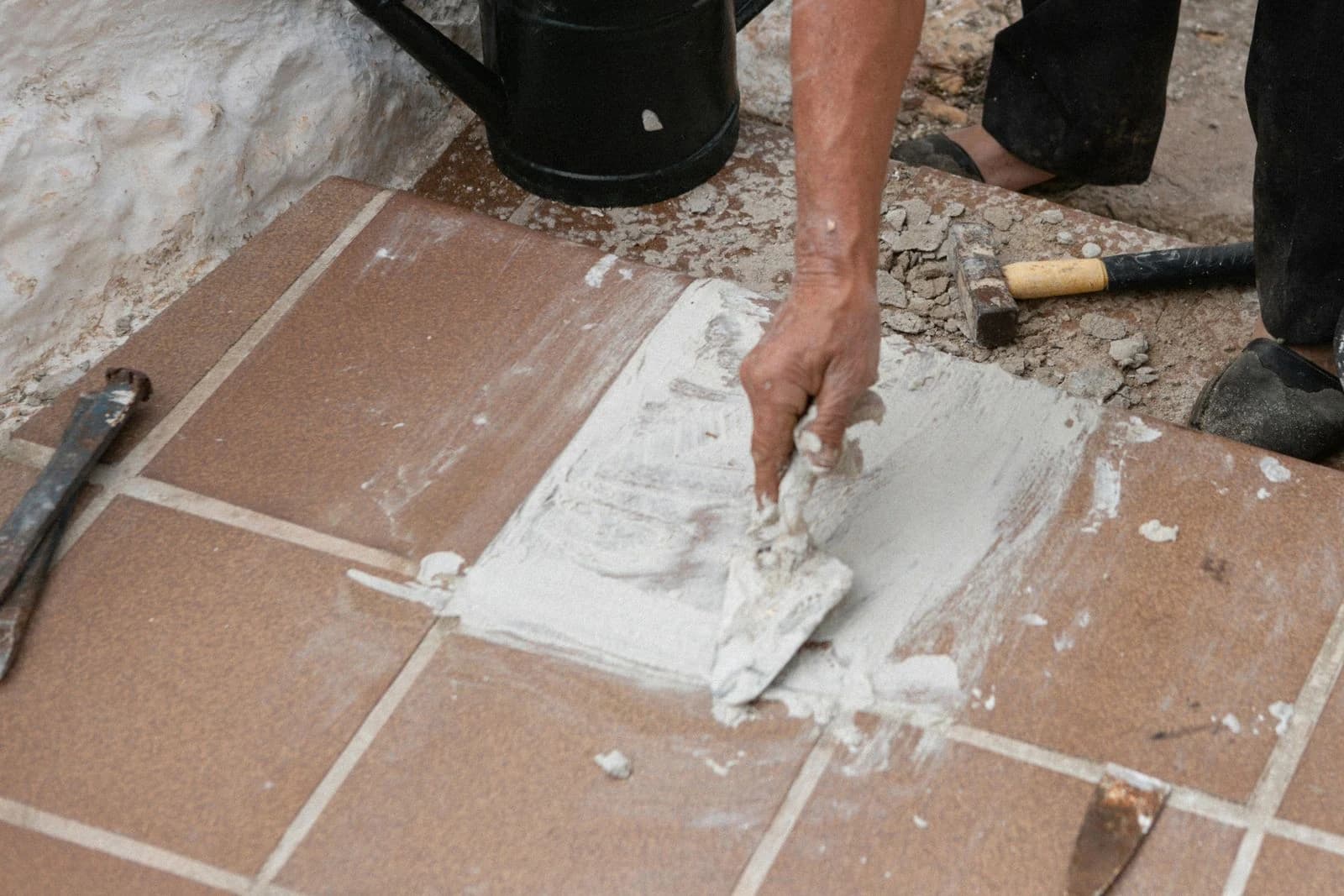
Open up and fill the cracks, re-screed the falls towards the outlets and round off the angle between slab and parapet with a mortar fillet so the membrane does not crack.
Prime
Roll the cold-applied primer over the whole surface and the upstands, about 0.3 litre per m², and wait until it no longer sticks to a finger.
Lay the first layer
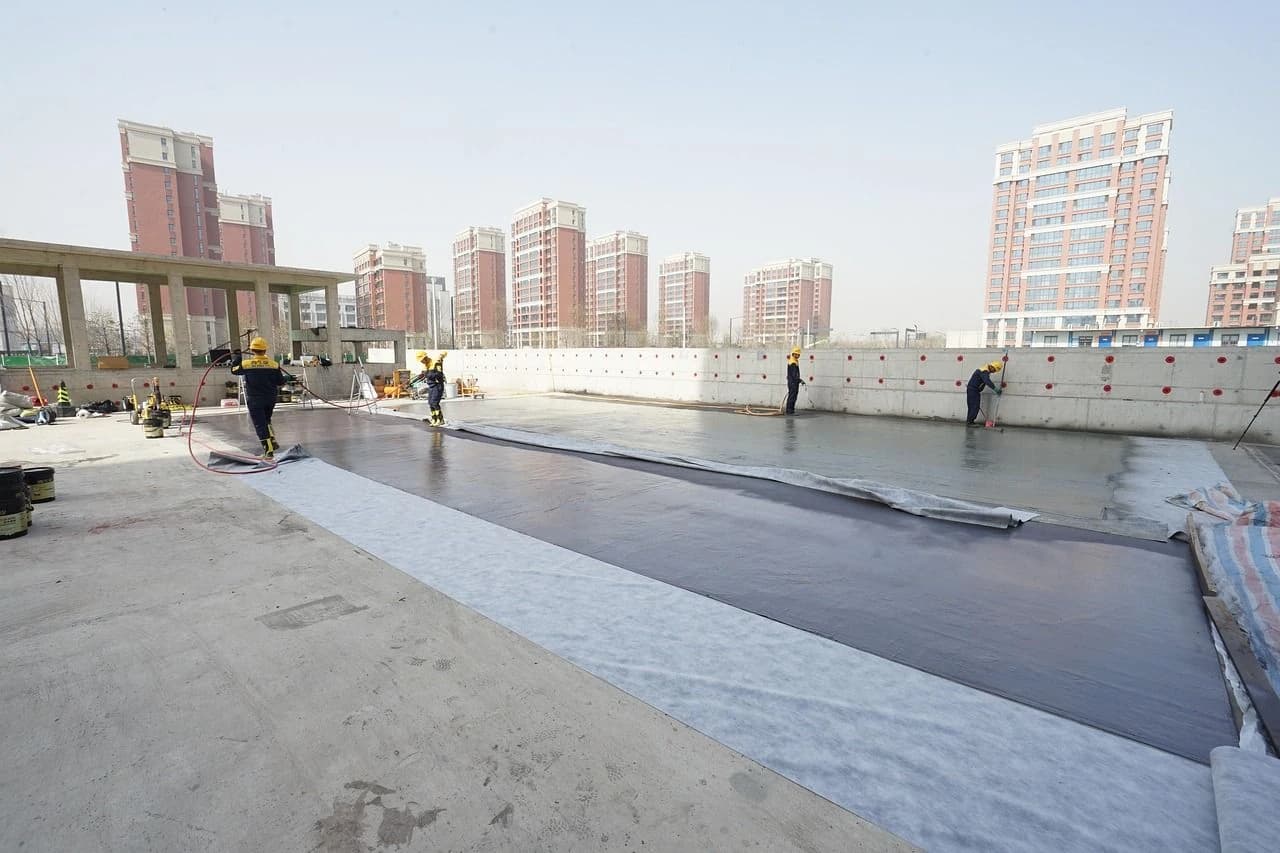
Unroll the 3 mm membrane dry to line it up, roll it back and torch-weld it starting from the low point, with 10 cm side laps and 15 cm end laps.
Lay the second layer
Weld the 4 mm membrane with its seams offset by half a roll width from the first layer, so no two laps sit on top of each other.
Finish the upstands
Take the alu-faced felt at least 15 cm up the parapets above the future protection, weld it, then fix the aluminium flashing strip along the top and seal it with bitumen mastic.
Test, then protect
Plug the outlets and flood the roof with two to three centimetres of water for twenty-four hours while watching the ceiling. If nothing comes through, lay the protection: bonded tiles, pedestal slabs or reflective paint.