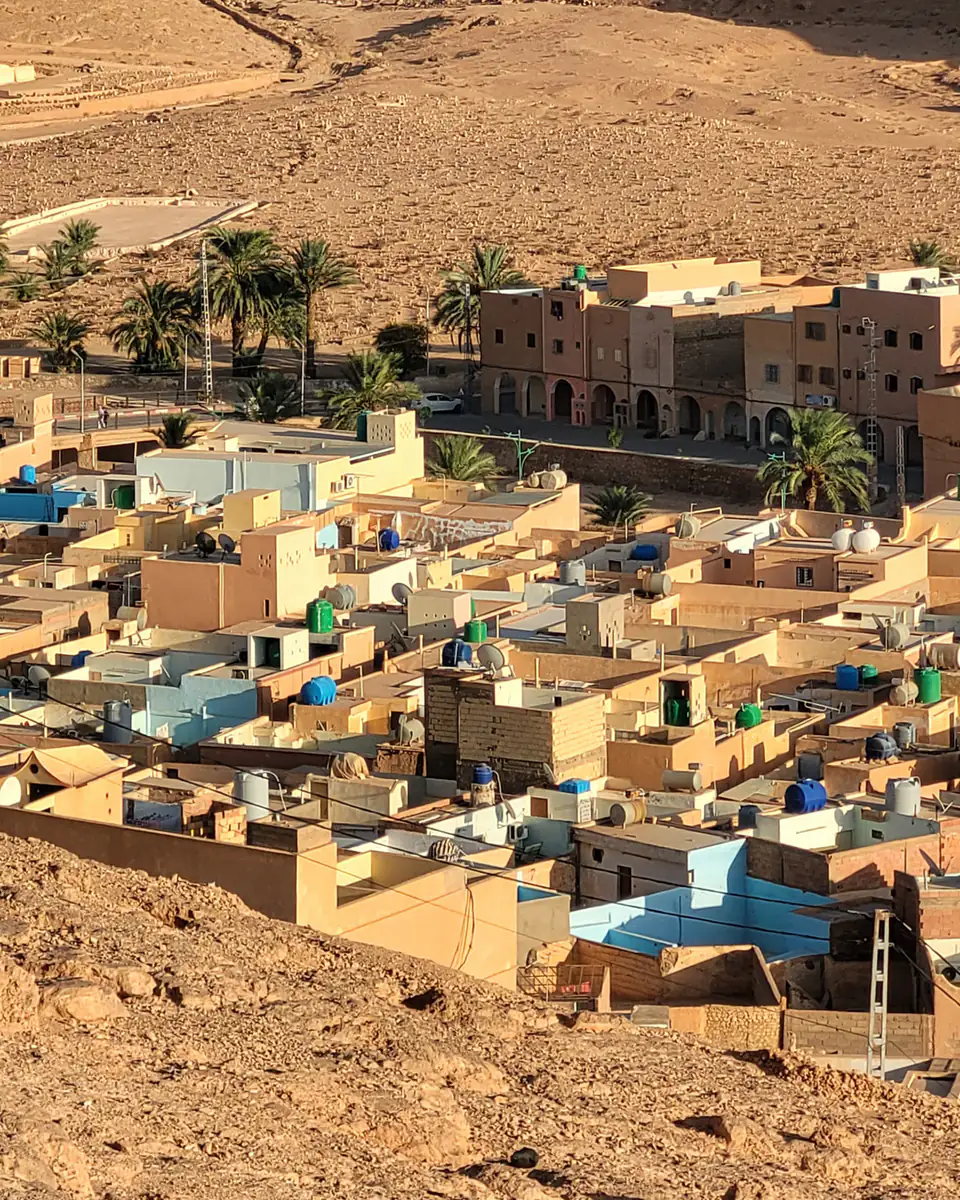
Djanet is an oasis in Algeria’s far south-east, set at the foot of the Tassili n’Ajjer plateau. The plateau has been on UNESCO’s World Heritage List since 1982, both for its sandstone landscapes and for its thousands of rock paintings and engravings. People come to walk, to sleep under the stars and to read in the rock a human story that goes back several thousand years. A first visit is mostly about choosing the right season and the right pace.
The season generally runs from October to March. Days are mild and bright, but nights can drop close to freezing in December and January, particularly up on the plateau. Outside that window the heat makes walking hard going, and some routes are not offered at all. The year-end holidays and the school breaks fill domestic flights quickly, so it pays to book early.
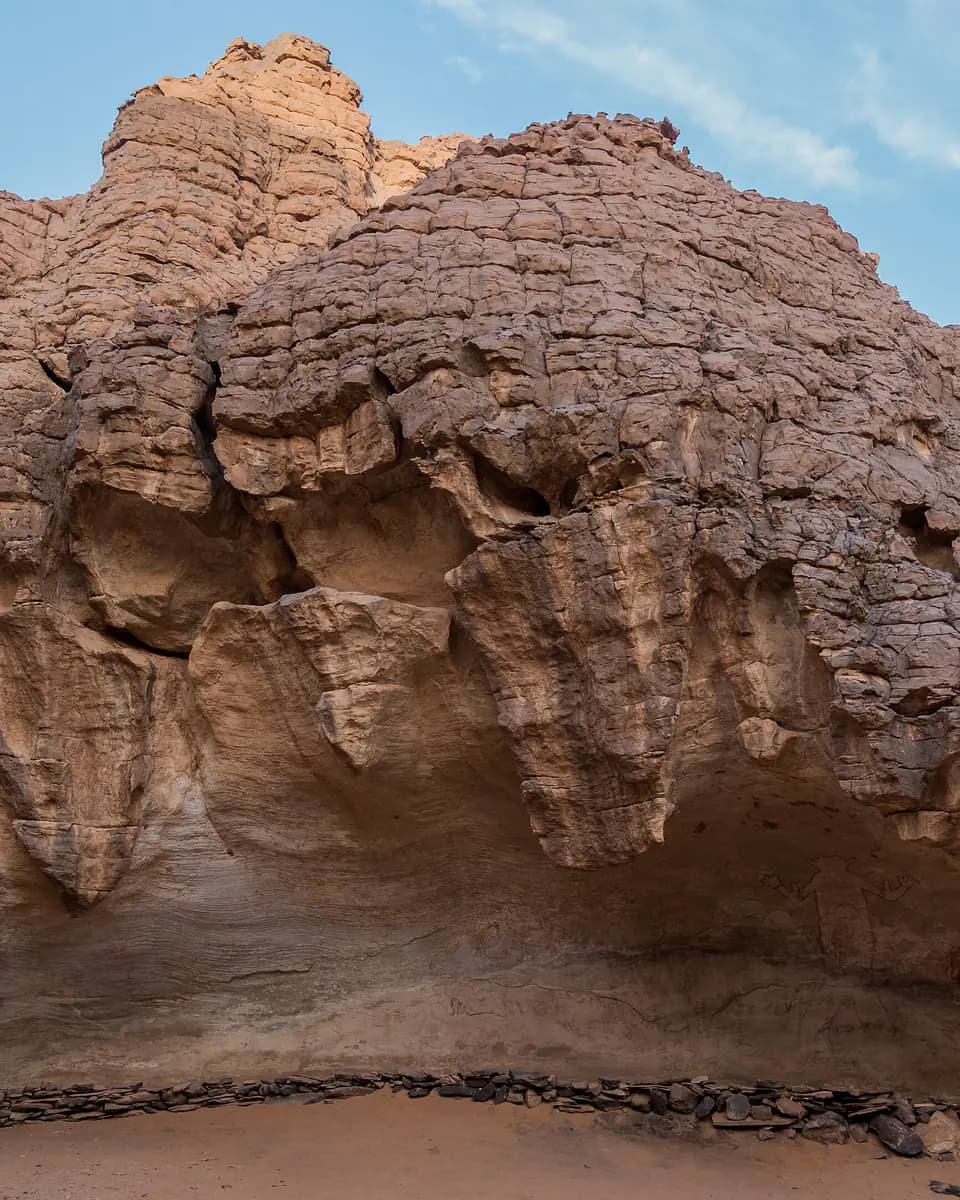
The region has two main faces. The Tassili proper is explored on foot, after a steep climb onto the plateau and then several days of walking between stone forests and painted shelters. The Tadrart, further south, is mostly covered by four-wheel drive, among orange dunes, arches and canyons. For a first trip, a circuit that combines a few days of each gives a fair picture of the whole.
The rock-art sites are visited with a local guide, and that is a good thing. The paintings are fragile: they are not touched, not wetted to make them stand out in a photograph, and not approached closer than the marked distance. A guide can also read what an untrained eye misses, from pastoral scenes to far older figures. Access rules for the protected areas change, and the agency confirms them at the time of booking.
The camp is the heart of the journey. The crew pitch the tents, cook and keep the fire going, while travellers sleep under canvas or in the open depending on the weather. Comfort is simple: no shower for several days, water that is rationed, and improvised toilets well away from camp. It is precisely that simplicity that most travellers remember once they are home.
For packing, the rule is layers. A thermal base layer, a fleece and a warm jacket bridge the gap between afternoon and night, and a good sleeping bag does more for your sleep than any mattress. A chèche, the long desert scarf, protects from sun and blowing sand alike, and walking boots that are already broken in spare you blisters on the second day. A head torch, sun cream and a water bottle complete the essentials.
Finally, you have to accept a particular rhythm. The stages follow the light: an early start, a long pause through the hottest hours, then walking again late in the afternoon. Phones rarely find a signal once you leave Djanet, which is worth telling your family before you go. Those who settle into this tempo usually come back wanting to return.
Our advisers can adapt the length of the circuit to each traveller’s fitness, and plan shorter stages or a support vehicle. Before departure they send a kit list and a day-by-day programme. And if a date does not suit you, raise it early: seats on these flights go quickly.
Visa, health and entry rules change without notice: check them with the consulate or the official portal before you travel.