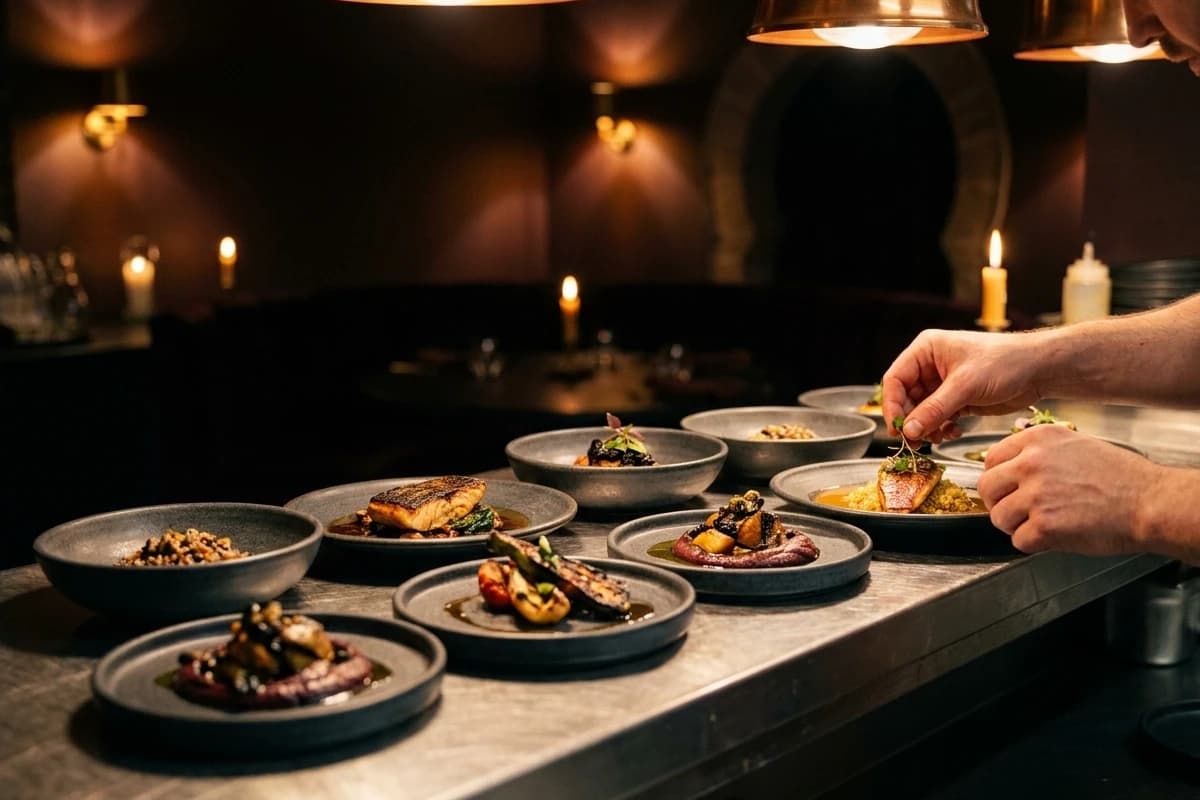
The menu begins at the water’s edge. The sardines of the bay arrive in the morning, barely seared, then laid in an escabèche with caraway: the sea of Algiers, its light, its salt.
Then the house. Chorba frik, the soup of every Ramadan evening, becomes a clear consommé; mhadjeb, the street flatbread of Constantine and Setif, is layered fine and topped with terfess, the desert truffle that comes out of the sand in spring.
The heart of the menu climbs to the High Plateaus: the chakhchoukha of Biskra and its lamb cooked for seven hours, the couscous of the sea that joins the two worlds. Each dish has its map: on a drawn Algeria we show where the wheat, the lamb, the olives and the saffron come from.
We end with dates. Makrout reinvented, semolina and orange-blossom honey, a mint granita before: the sweetness of a grandmother’s afternoon tea, served at the pass. Eight courses, three hours, and the bay going dark behind the windows.
An article signed by the house