It is the story of every job that goes wrong: the tiler stops four square metres from the end, you go back and buy two boxes of the same tile — same reference, same price — and once laid they are visibly lighter. Nothing is faulty: they simply come from another production run.
Tile is a fired product. From one firing to the next, the kiln temperature, the clay and the glaze vary slightly. Manufacturers therefore sort production into lots, and each lot has its shade and its calibre.
Lot, batch, shade, calibre
The lot, also called the batch, means one consistent production. The shade is a colour code: two lots of the same shade can be laid together, two different shades cannot. The calibre is the tile’s actual size, which can vary by a millimetre or two from lot to lot; mixing two calibres gives joints that no longer line up.
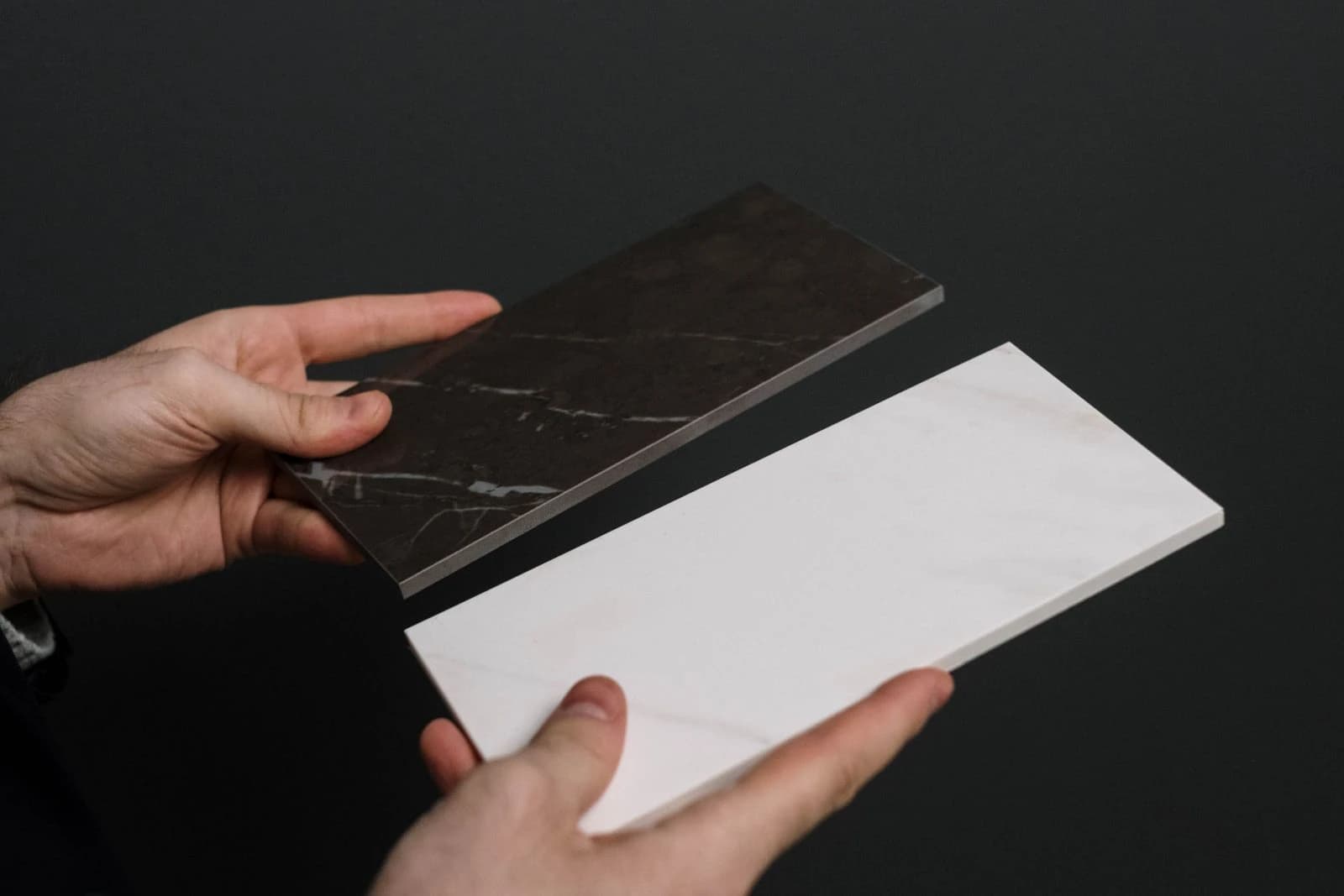
On a patterned tile, or one imitating stone and marble, the variations from tile to tile are intended, but the overall tone must still come from one lot.
Reading a box label
Every box carries the reference, the format, the number of tiles and of square metres, and three details that matter here: the lot number, the shade (often a letter or a code) and the calibre. Before laying, check that every box on the job carries the same. If not, set the odd boxes aside and lay them in a separate room.
Order it all, at once
The rule is simple: order the whole job’s quantity in one go, waste included, plus a spare box. The tile calculator gives the number of boxes with the waste percentage suited to the pattern: 5% for a straight lay in a small format, 10 to 15% for a large format or an offset lay, more for diagonal or herringbone.
At Qarmoud, tile and faïence stock is tracked lot by lot at every depot. An order is served from a single lot whenever possible; when two lots of the same shade have to be combined, or when stock is short, the order says so before delivery, not after.
Reserving a lot for a site that is not ready
Tiles are often chosen weeks before the site is ready for them: the screed has to dry, the services are not finished. A lot reservation sets the chosen quantity aside from one lot, at the depot of your choice, until delivery day. The tiles do not go to another customer, and you do not risk a new lot in another shade.
A trade account can reserve a lot for each of its sites and have it delivered in several drops, as the work progresses.
Keep a box
Once the tiling is finished, keep at least one full box somewhere dry. In five years, a tile cracked by a dropped pan, or a leak that means opening the floor, is repaired with the same lot. Finding the same lot years later is almost impossible.