The same tile does not look the same in 20 × 20 and in 60 × 120. Tile size decides how many joints there are, how light slides across the floor, how much waste there is and how exacting the job is for the tiler. Choosing a format is already choosing a mood.
Here are the formats found in an Algerian showroom today, from the smallest to the largest, with what to know before ordering.
Small formats: 10 × 10 and 20 × 20
Zellige at 10 × 10 and cement tiles at 20 × 20 are the formats of tradition. Their many joints draw a pattern and give relief, especially with an irregular glaze that catches the light. They are perfect for a splashback, a shower, an entrance wall, or a « rug » of cement tiles in the middle of a plain floor.
They take time to lay and need particular care with the joints, which are more numerous and so more prone to dirt. An epoxy grout in a zellige shower avoids a lot of trouble.
Metro tiles and 25 × 40 or 30 × 60 faïence
The bevelled 10 × 20 metro tile is back in kitchens and bathrooms: laid offset, in herringbone or vertically, it changes character without changing tile. Rectangular 25 × 40 faïence remains the economical, safe choice, while 30 × 60 gives a calmer wall with fewer joints.
45 × 45 and 60 × 60: the safe values
45 × 45 was long the living-room format; it keeps the advantage of a modest price and easy laying. 60 × 60 has replaced it as the reference: big enough for a fine continuity, small enough to stay manageable for one tiler and forgiving on an average floor.
In 60 × 60, rectified porcelain allows a 2 mm joint, almost invisible in a colour close to the tile. It is the best compromise for a whole flat.
Large format: 60 × 120 and beyond
60 × 120 makes a floor in one sweep, the kind seen in marble-look living rooms. It needs a very flat floor, a deformable adhesive and back-buttering. Its effect is spectacular and its demands are real: it is not the choice for an 8 m² room full of cuts.
Planks: 20 × 120 and 15 × 90
Ceramic parquet in 20 × 120 or 15 × 90 planks looks like wood without fearing water, which makes it a favourite for bedrooms and even kitchens. Laid in a random stagger or in herringbone, it gives the warmth of oak with the upkeep of tile. Like every long format, it is laid with an offset of no more than a third of the plank.
How to choose
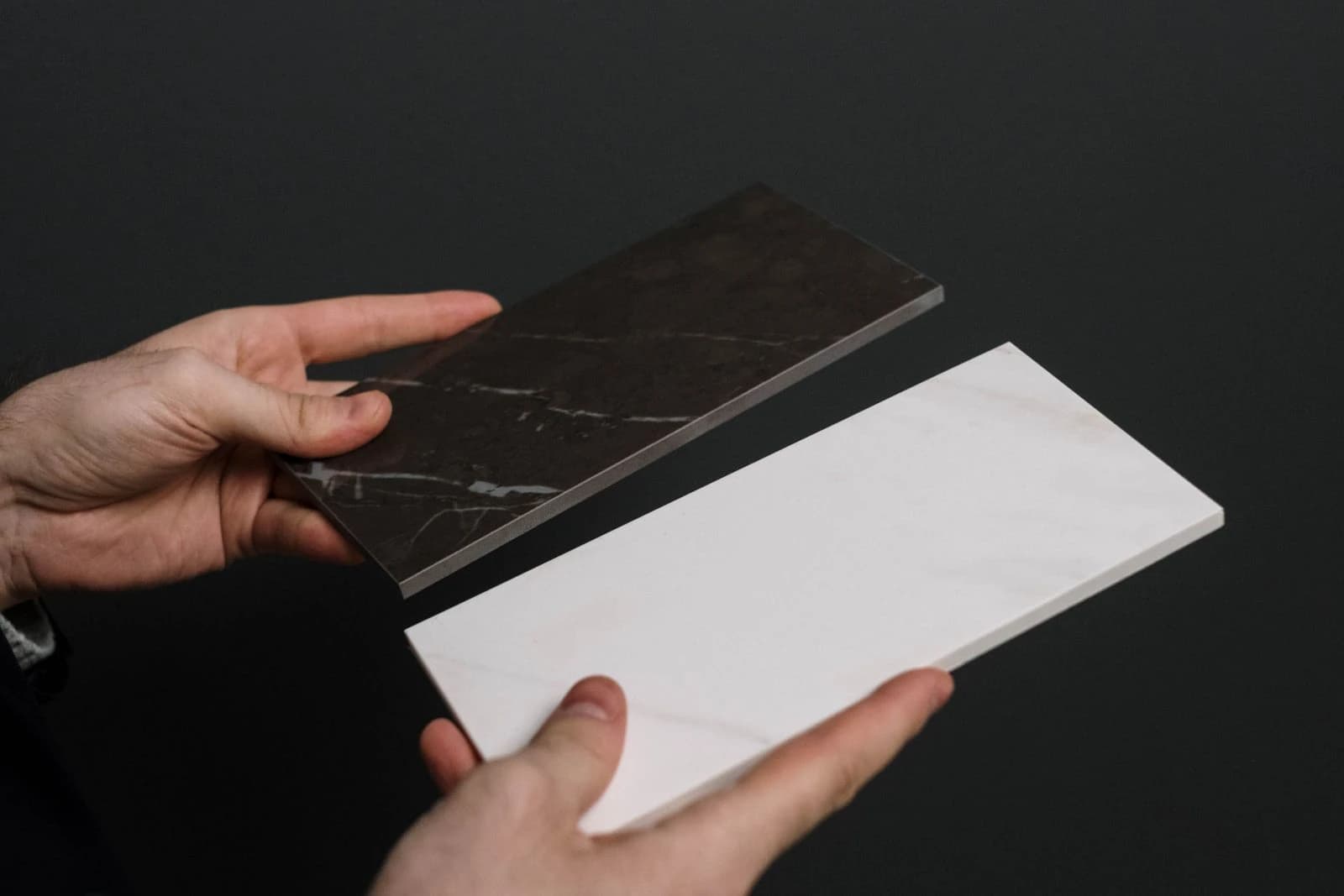
Look at the room, not just the tile. A small room can take a large format if it has few cuts; a large, irregular room prefers a medium one. Allow more waste for large formats and for diagonal or herringbone patterns. And lay a few tiles of each option on the floor, in the room’s own light, before deciding: the planner and the material library help you picture it, the sample settles it.