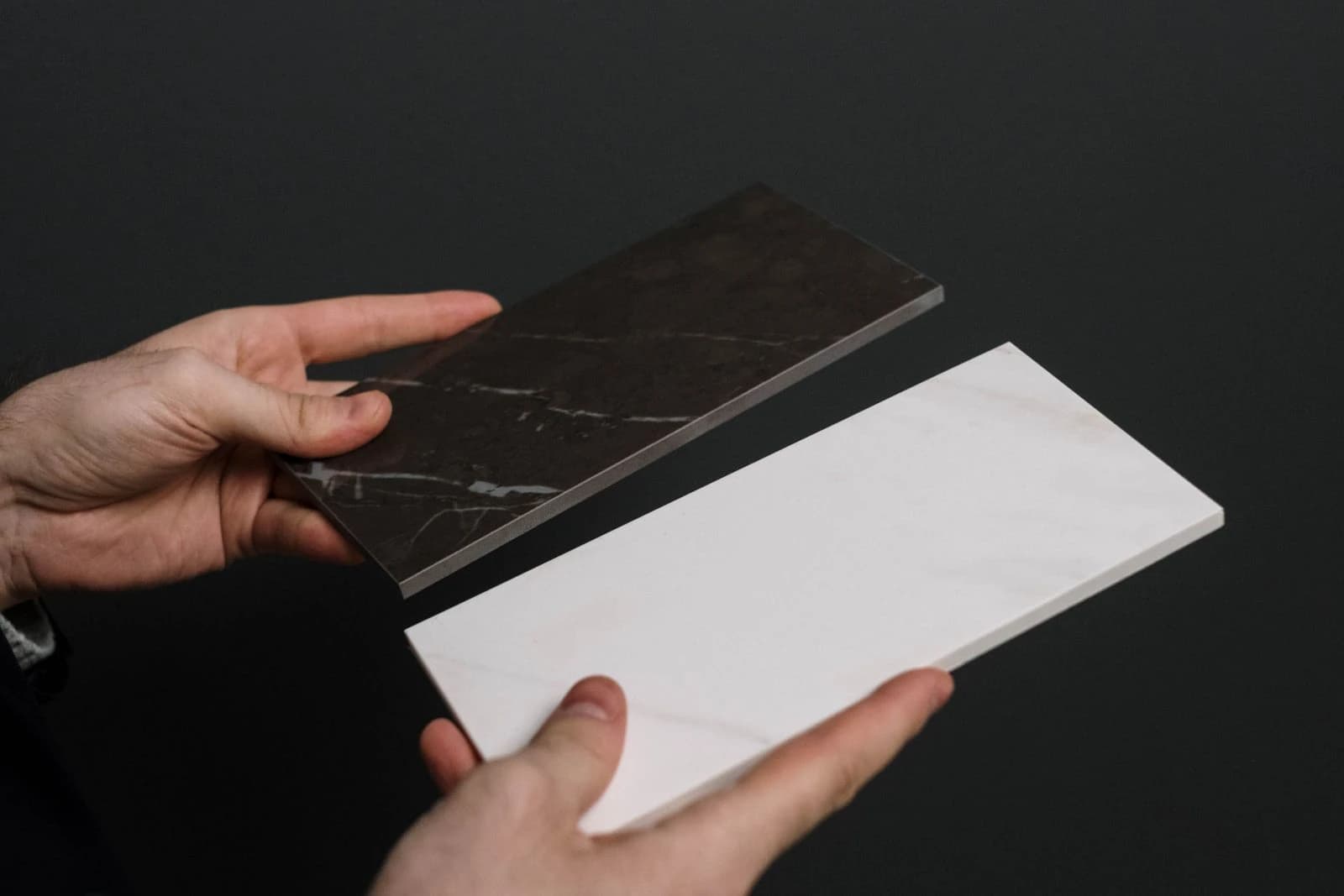
After years of uniform grey porcelain and gloss white everywhere, interiors are warming up. Showrooms are seeing the return of materials once thought to belong to our grandparents’ houses: zellige with its uneven sheen, speckled terrazzo, patterned cement tiles, terracotta.
This is not nostalgia: these materials age well, they cope with the heat and they give character to rooms that are often standardised. You still need to know where they belong.
Zellige, light that moves
Zellige is a small glazed tile whose surface is never perfectly flat: each piece returns the light a little differently, and that is its whole charm. In deep green, off-white or earth, it dresses a kitchen splashback, a shower, a niche or an entrance wall.
Its variations in tone and thickness are normal; tiles from several boxes are mixed before laying to spread them out. In a shower, an epoxy grout protects it from stains and damp.
Terrazzo, the floor that never dates
Chips of marble and stone set in a binder, terrazzo is the floor of many older Algiers buildings. Today it comes as 40 × 40 tiles, in white, grey or multicolour, easier to lay than terrazzo poured in place. It suits a living room as well as a kitchen, and its speckled pattern hides everyday dust.
Cement tiles, the house’s rug
The 20 × 20 cement tile, with its geometric patterns in blue, black or green, rarely covers a whole room. It is strongest as a « rug » in the middle of a plain floor, a band in a corridor or a splashback. It is porous: it is treated with a protective sealer after laying, and cleaned with mild soap, never with an acid cleaner.
Terracotta, warmth underfoot
Brick-coloured terracotta tiles are back on roof terraces and in kitchens that open to the outside. They go well with light oak, matt white and green. On a terrace in the high-plateau regions, choose a frost-resistant terracotta.
What these materials ask for
A natural material is protected and looked after. Cement tiles and terracotta take a water- and oil-repellent treatment after laying, renewed every two or three years in a kitchen. Zellige is cleaned with clear water and black soap. Terrazzo is washed with a neutral detergent and can be repolished after years of footfall, which brings back its original sheen.
Combining without overloading
The rule fits in one sentence: one strong material per room. A green zellige wall with a white terrazzo floor; a cement-tile rug in plain porcelain; an earth-toned splashback with oak fronts. Two patterned materials in the same room fight each other.
The site’s ambiances show these combinations in real rooms, with the floor or wall swappable live, and the material library lets you see each surface up close before asking the showroom for a sample.