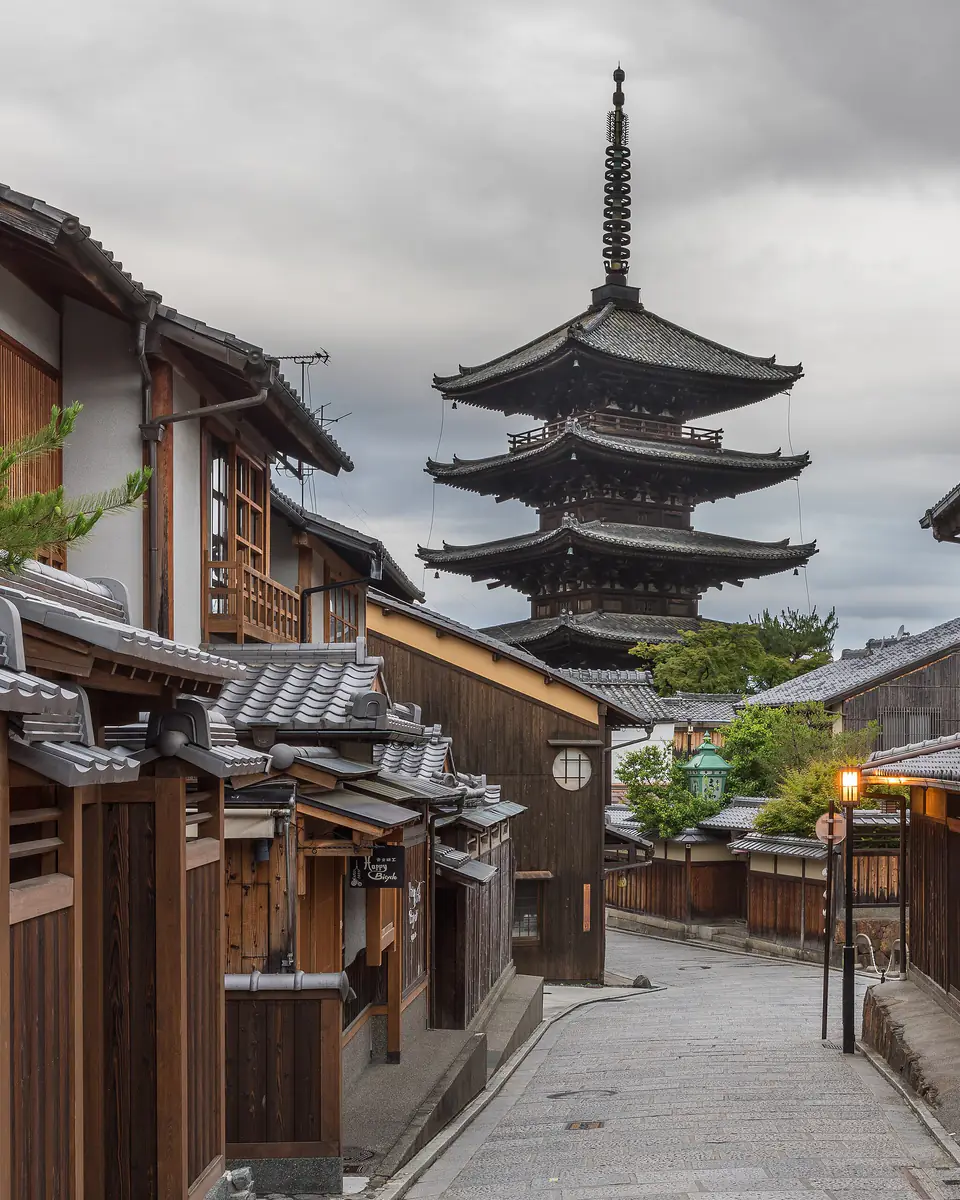
Kyoto changes colour every autumn, when the maples in the temple gardens turn from green to deep red. The timing varies from year to year, but the colours usually peak between mid-November and early December. It is one of the city’s most sought-after seasons, which calls for a little method.
The first rule is to go early. The best-known gardens, such as those of Tōfuku-ji or Eikan-dō, fill up from mid-morning in high season. Arriving at opening time gives a softer light and a silence that is part of the experience. Some temples also open in the evening, with their gardens lit.
Arashiyama, on the western edge of the city, deserves a full day. The bamboo grove, the Togetsukyō bridge and the wooded slopes above the Hozu river make up one of the most photographed landscapes in Japan. Here too the first hours are the calmest, and the day can be extended with a boat trip on the river.
The Philosopher’s Path links several temples in the north-east of the city on foot, along a tree-lined canal. In half a day you walk from Ginkaku-ji to the area around Nanzen-ji, through quiet residential streets. It is a good way to slow down after the busiest sites.
For the night, a ryokan offers an experience particular to Japan: tatami mats, futons laid out in the evening, a shared or private bath depending on the inn, and often a dinner served as a sequence of small dishes. The etiquette is simple but precise, such as washing before stepping into the bath. One or two nights in a ryokan, alongside a conventional hotel, make a good balance.
The city is easy to get around by bus, underground and on foot, and the train reaches Nara or Osaka in under an hour for a day trip. The Japanese rhythm is punctual and quiet: people speak softly on public transport and respect the queue. Travellers who fall in with it find the country remarkably easy.
Japan currently requires Algerian travellers to hold a visa issued by the embassy, and the documents asked for can change. We give you the list in force at the time of booking, to be confirmed with the embassy before you apply. Allow plenty of time, as the maple season is booked several months ahead.
Visa, health and entry rules change without notice: check them with the consulate or the official portal before you travel.