Heritage
The karakou today: keep the stitch, change the cut
The embroidered jacket of Algiers women is two centuries old. What our capsule keeps of it, what it leaves aside, and how to wear it somewhere other than a wedding.
Published 24 September 2026 — 2 min read
The karakou is a short, fitted velvet jacket covered in gold-thread embroidery. For generations it was worn over a chelka saroual and a silk blouse, and it is still worn that way at weddings in Algiers, Blida and Tipaza. It is heavy, it is costly, and it is handed down. Which is exactly why it sleeps eleven months out of twelve in a garment bag.
Our capsule starts from a simple question: what has to be kept for the jacket to remain a karakou, and what can change so that it leaves the bag?
What we keep: the fetla, and the hand
Fetla is a gold cord laid on the velvet and couched down stitch by stitch. It cannot be done by machine without losing its relief, and we have not had it done by machine. On our short garnet velvet karakou each front takes hours of hand embroidery, at our table in Baba Ali or with our partner embroiderers in Tlemcen: Cropped velvet karakou, fetla embroidery. Every piece is numbered inside the collar.
For those who want the full look, the peplum karakou keeps the denser majboud embroidery and the defined waist: Peplum karakou, majboud embroidery. It is the capsule’s ceremonial piece, and we present it as such.
What we change: the cloth and the length
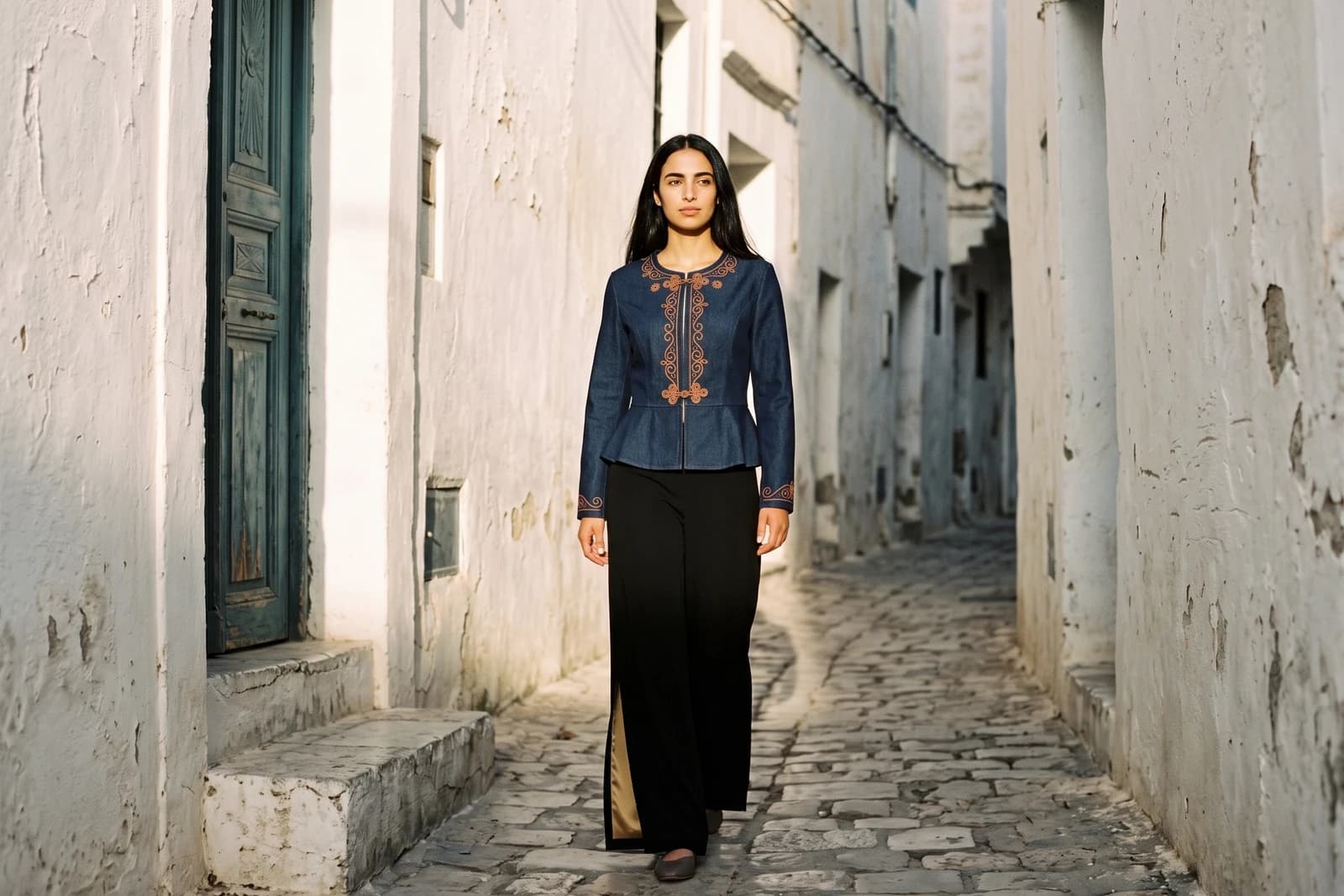
The capsule’s freest gesture is a karakou in raw denim, embroidered tone on tone. It goes over a white T-shirt and straight trousers, on an ordinary Tuesday, to work: Embroidered denim karakou. The same pattern exists in linen, without a single gold thread, for summer: Linen karakou, tone-on-tone embroidery. Both jackets keep the shoulders, the drawn line and the edge-to-edge closing; they leave the weight and the price in the wardrobe.
Below, the chelka saroual becomes trousers split at the side — straight enough for a day at the office, full enough to sit on the floor at a henna night: Slit trousers after the seroual chelka.
How to wear it somewhere other than a wedding
Three rules are enough. One embroidered piece per outfit: a karakou wants plain things around it, not an embroidered skirt as well. Less jewellery than you think: the fetla already is jewellery. And flat shoes, or nearly, which say you chose the jacket for yourself rather than for a protocol.
In the evening, an embroidered velvet clutch echoes the motif of the front without repeating it: Embroidered velvet clutch. For a lighter line, the embroidered crepe bolero goes over the simplest black dress: Embroidered crepe bolero after the karakou.
Care, in two lines
A karakou never goes in the machine, nor to an ordinary dry cleaner. It hangs on a broad hanger out of the light and is steamed from a distance, on the inside. For a stain, bring it back to the boutique: we treat it with the workshop that embroidered the piece.
The pieces in this story
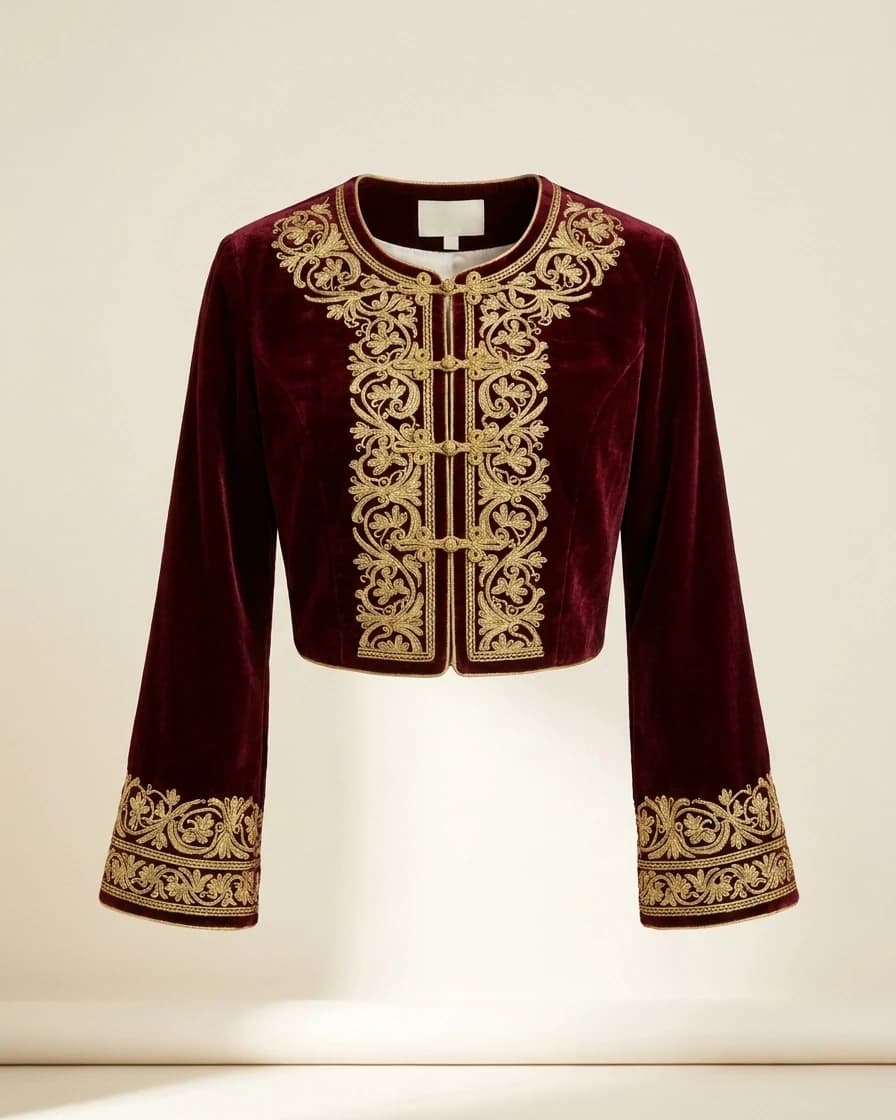
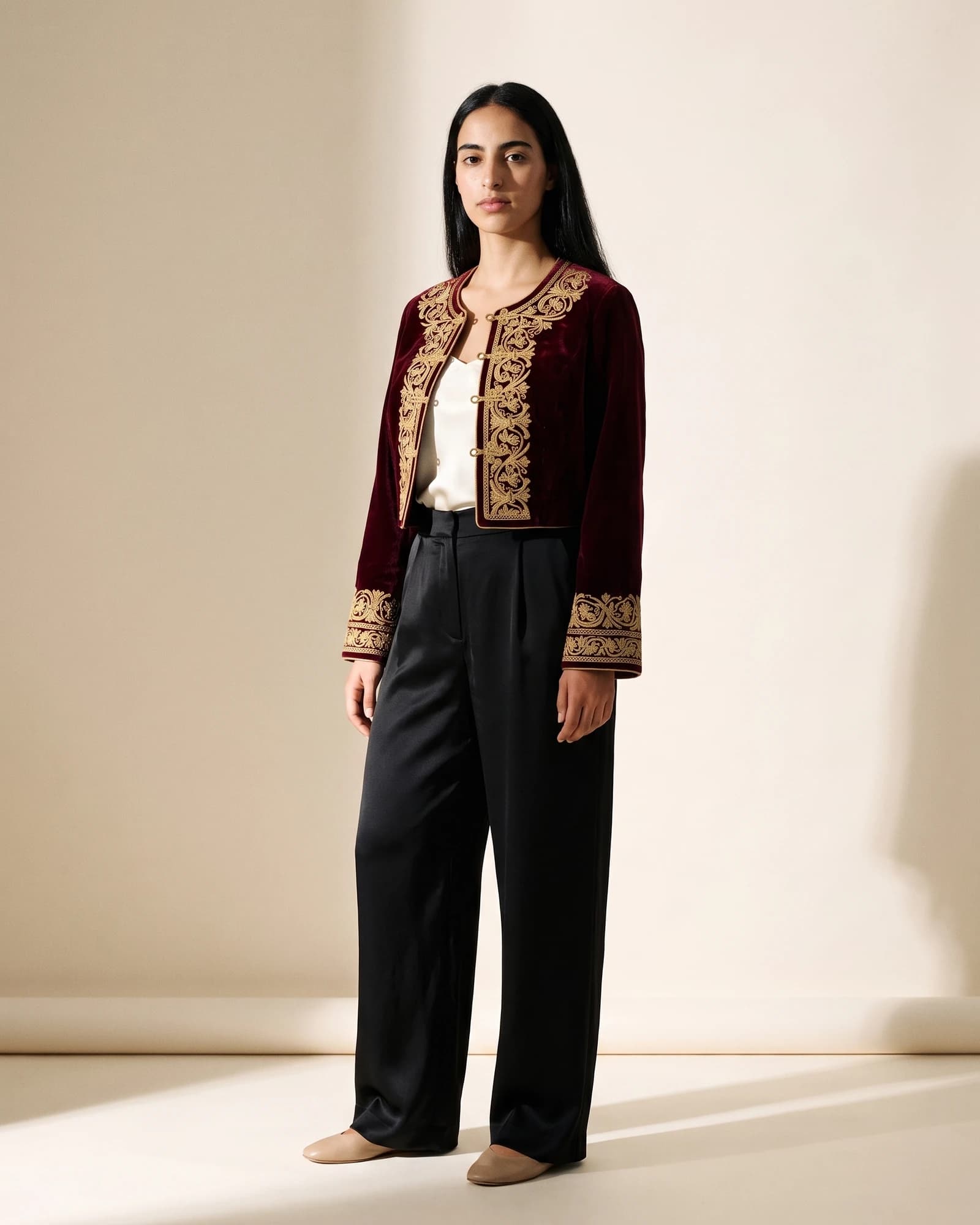
Cropped velvet karakou, fetla embroidery
DZD 72,000
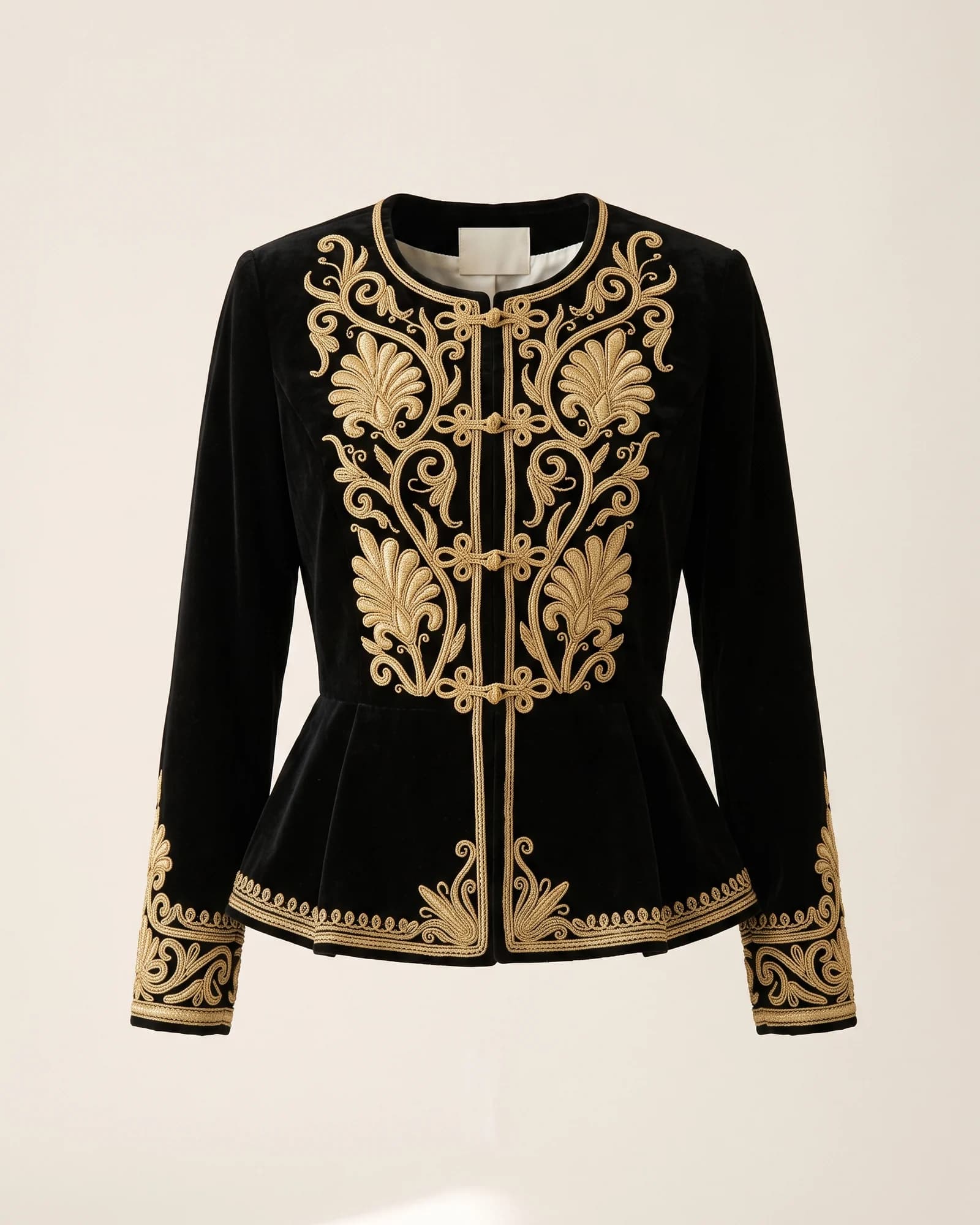
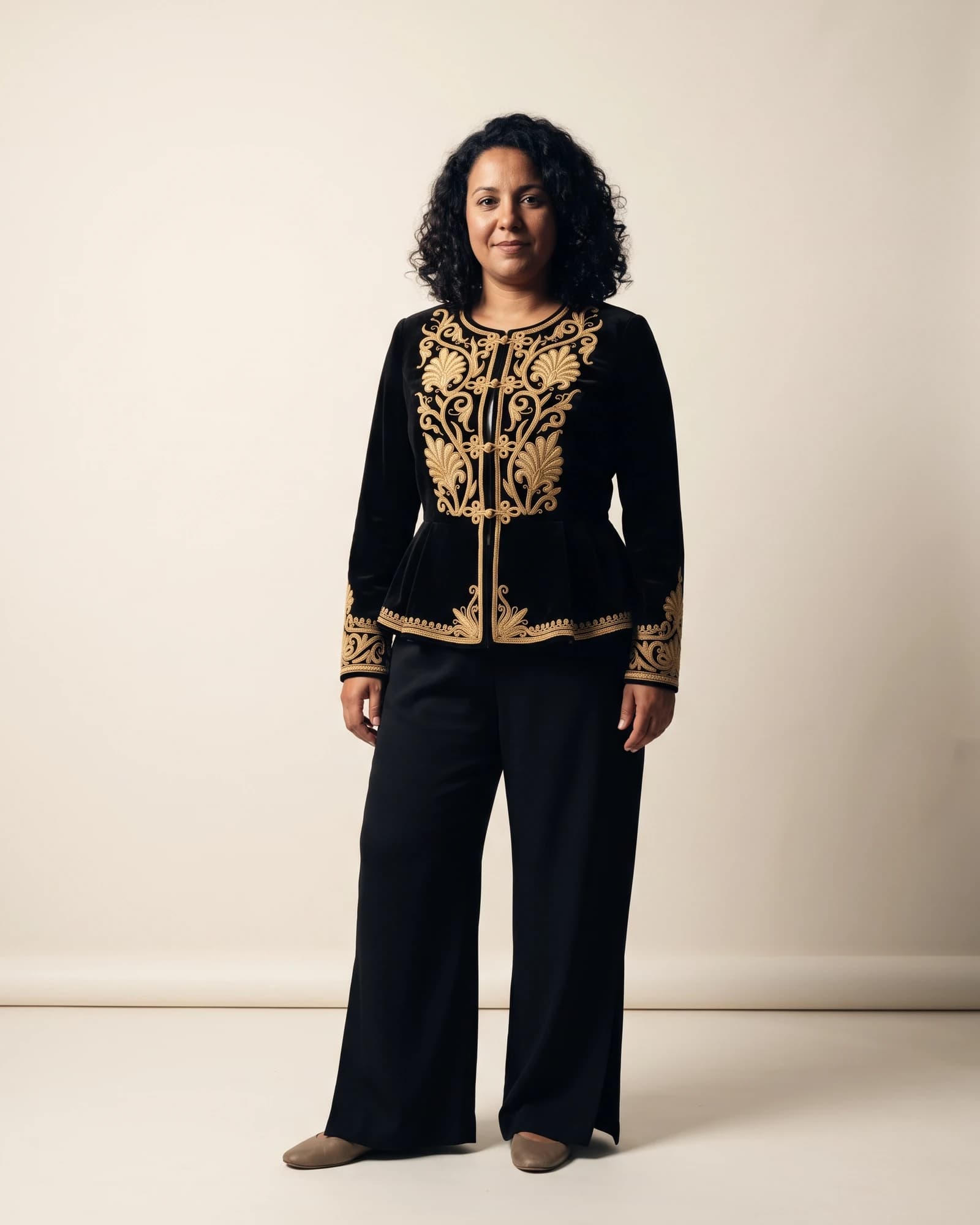
Peplum karakou, majboud embroidery
DZD 78,000
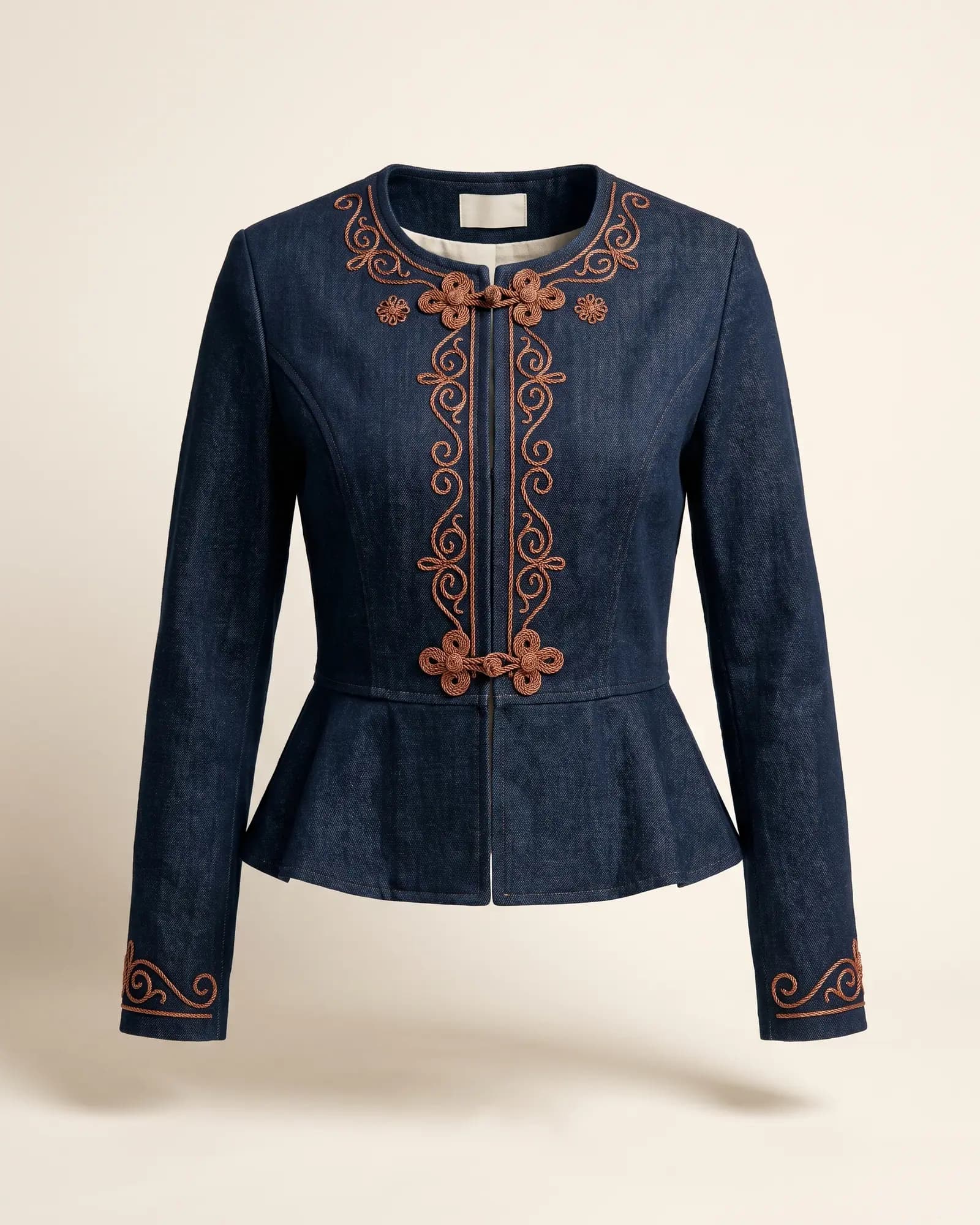
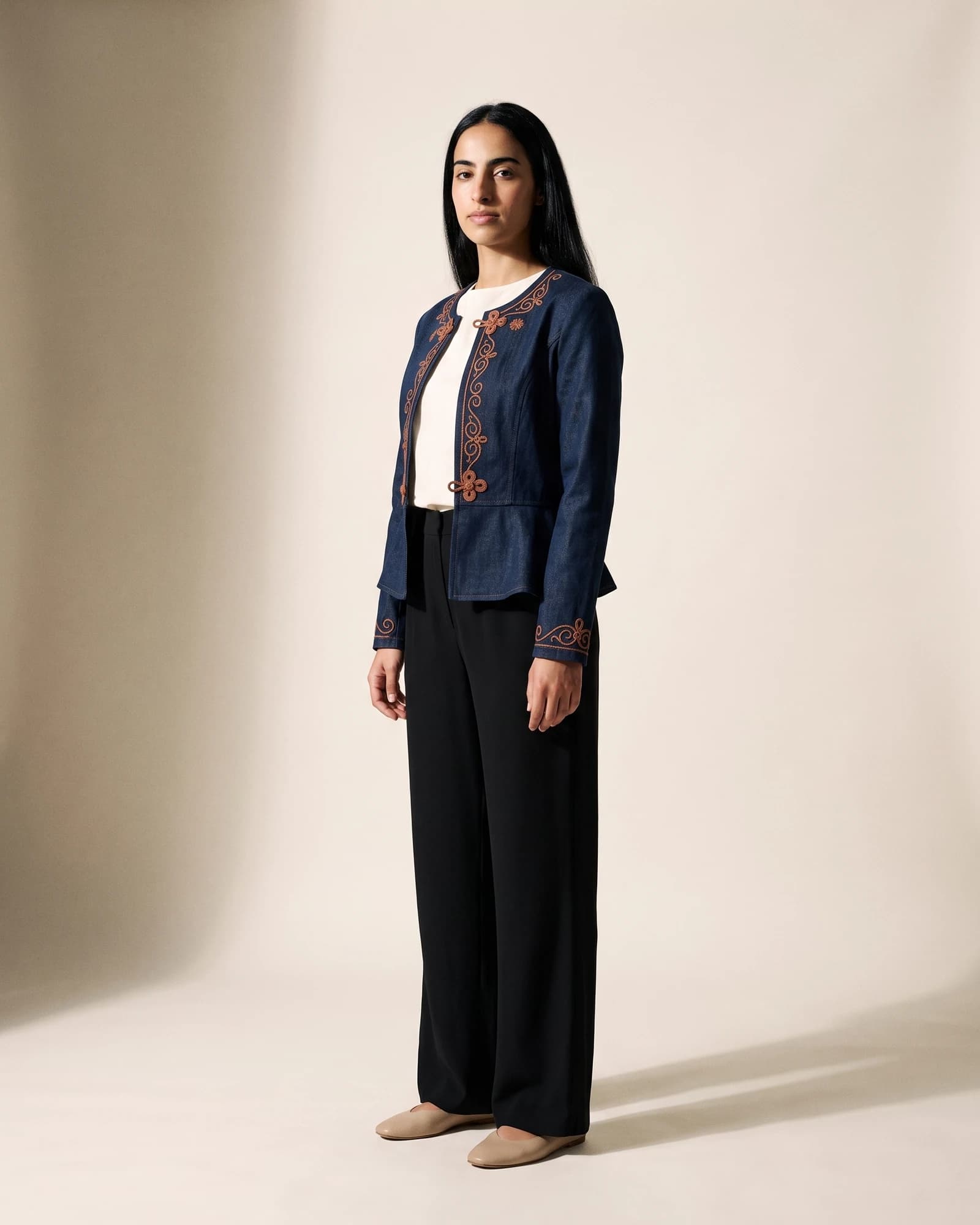
Embroidered denim karakou
DZD 45,000
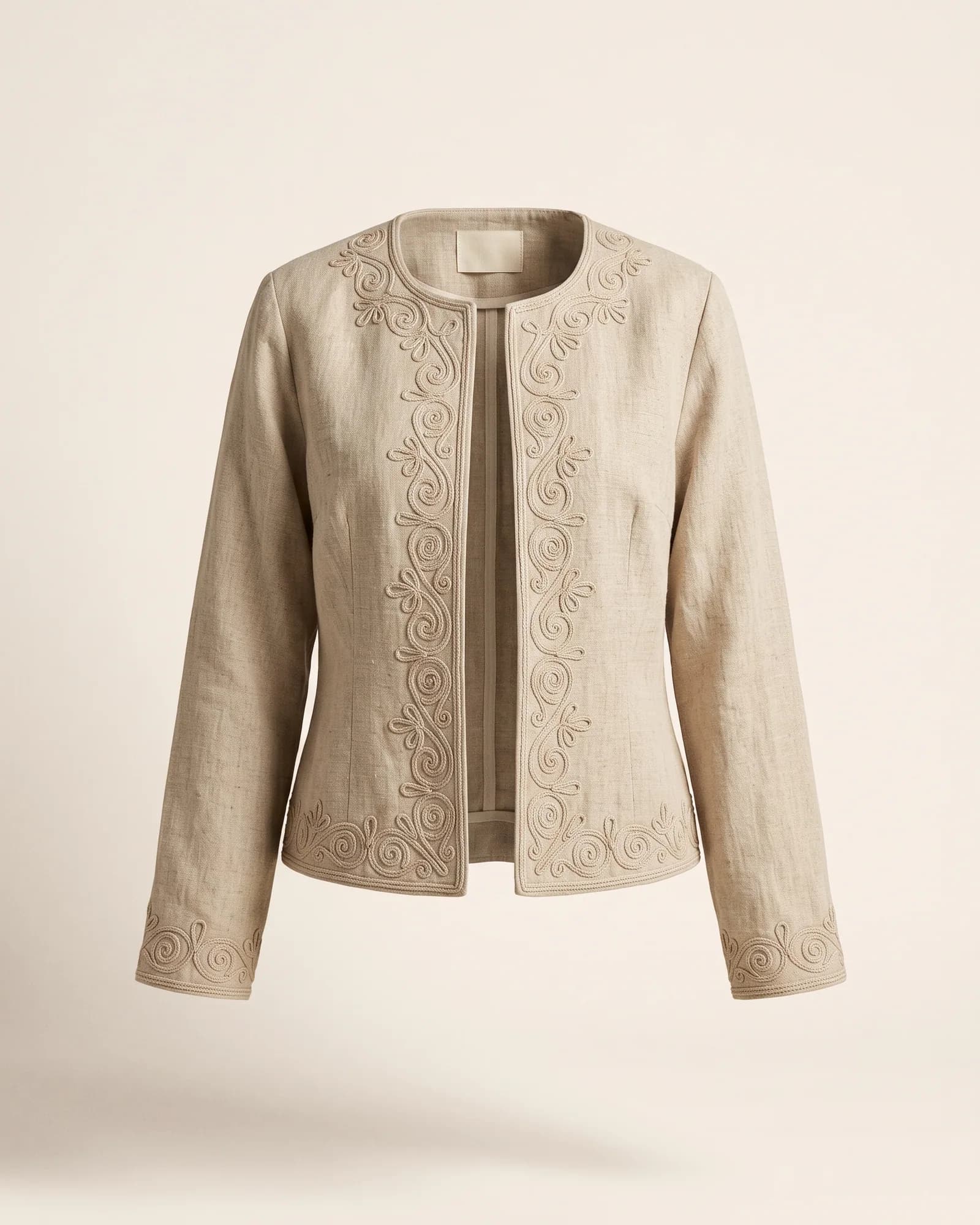
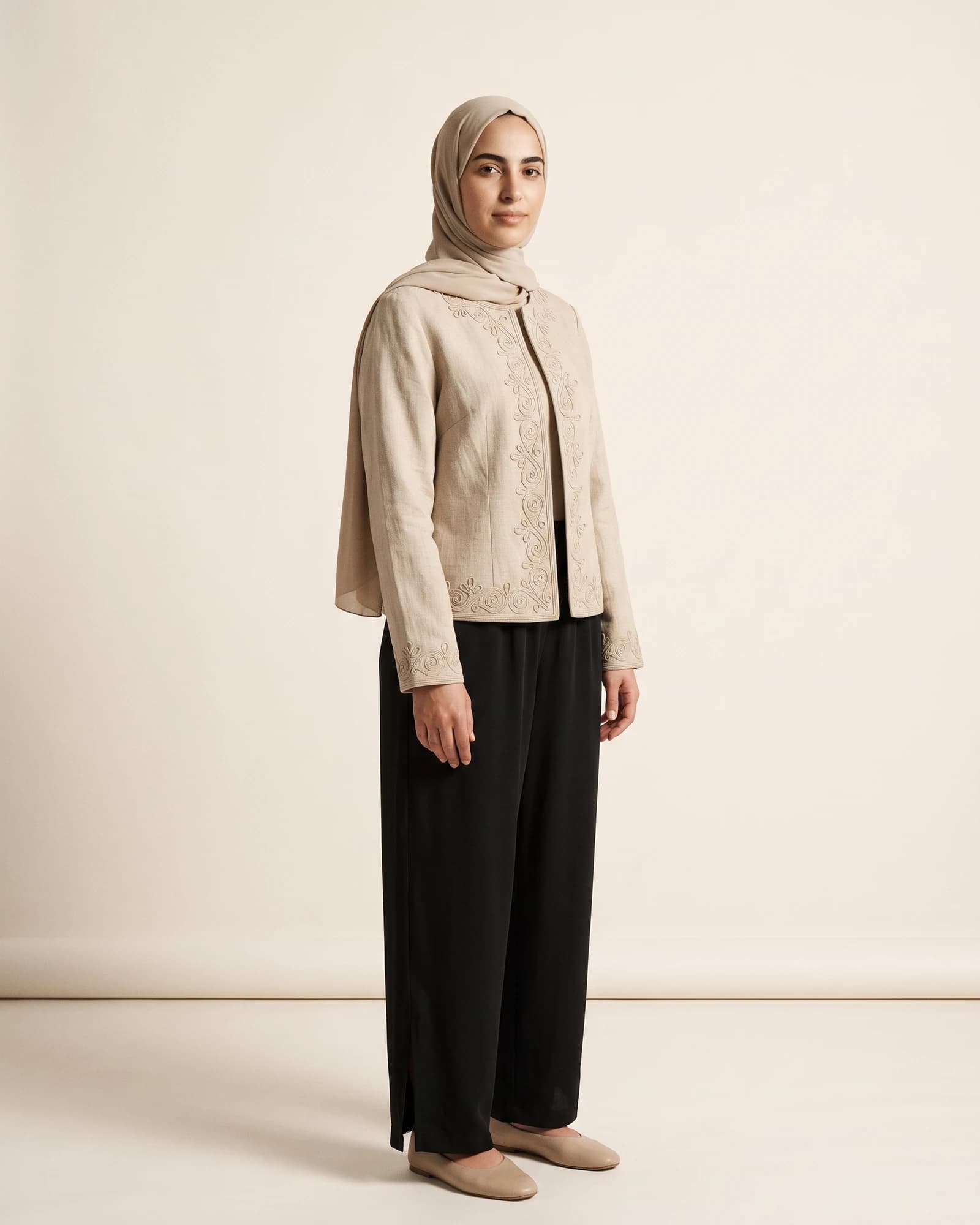
Linen karakou, tone-on-tone embroidery
DZD 46,000
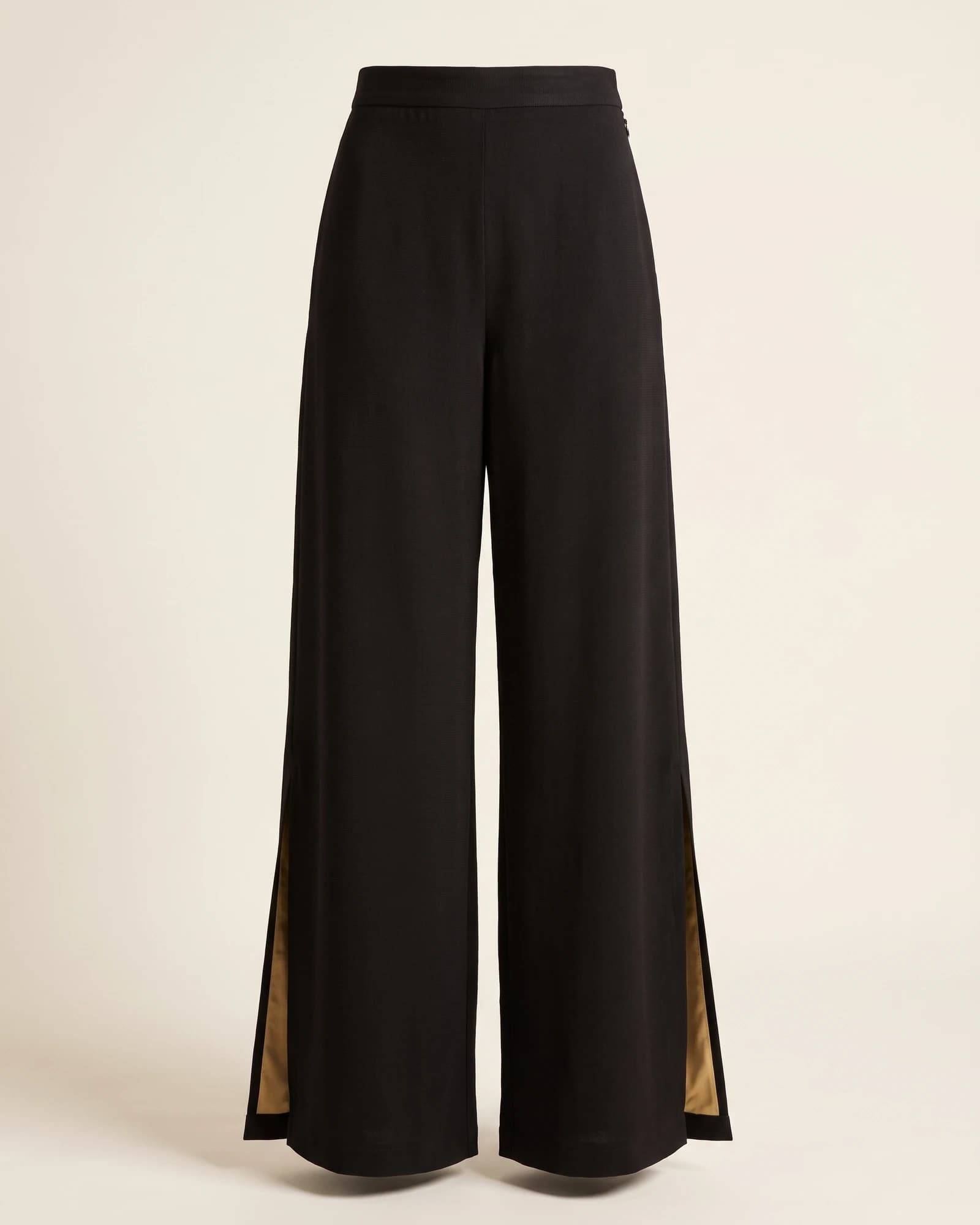
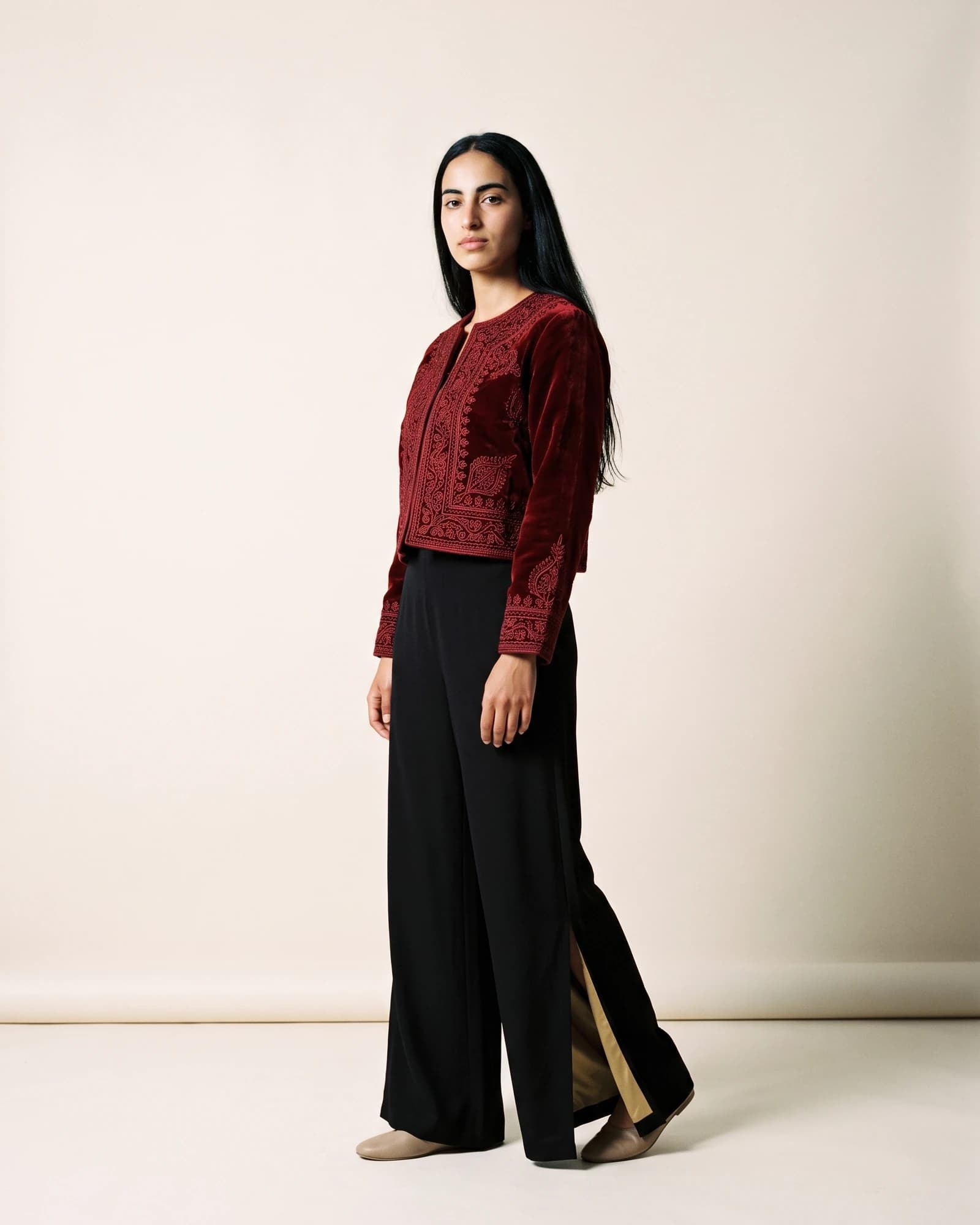
Slit trousers after the seroual chelka
DZD 11,900
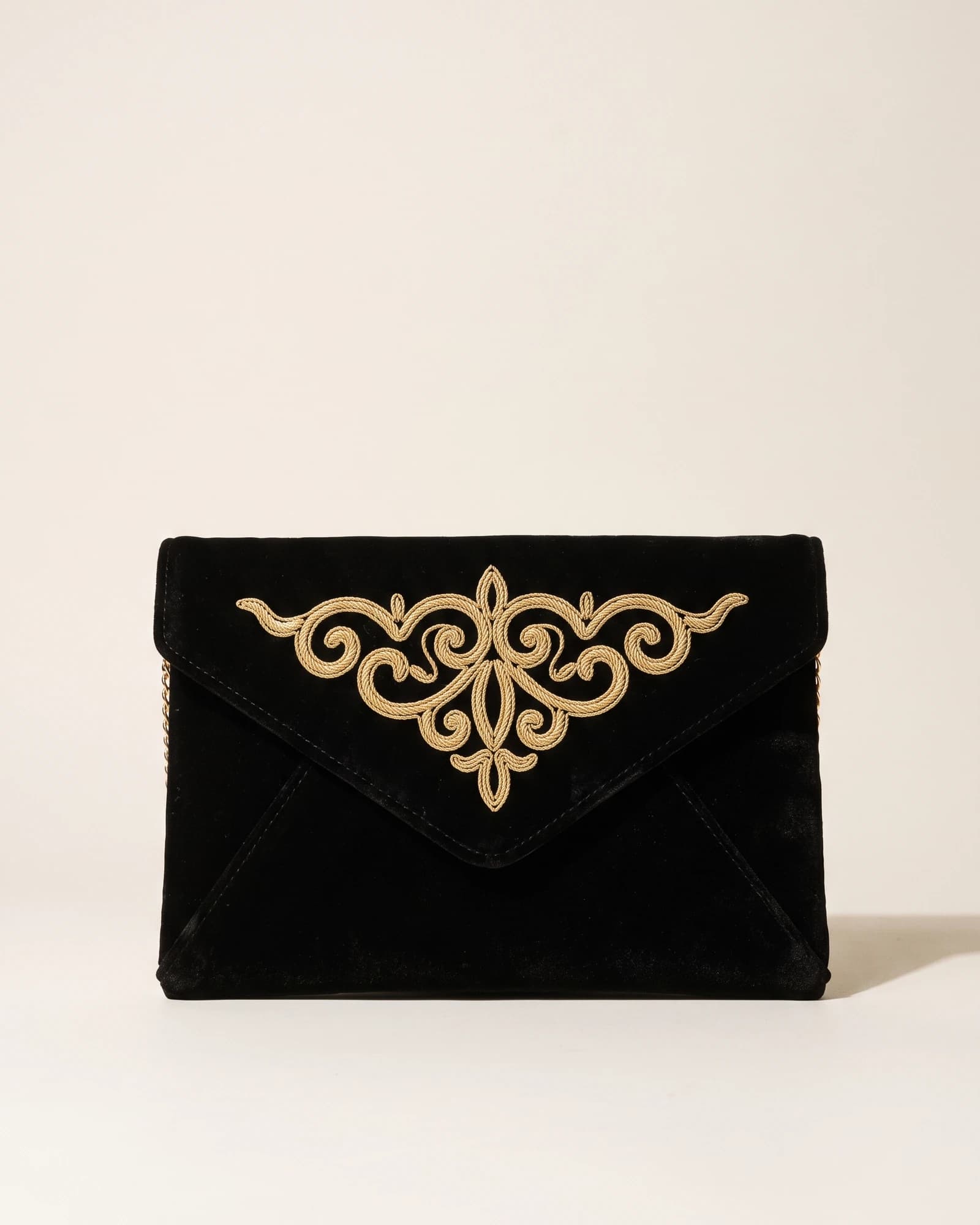
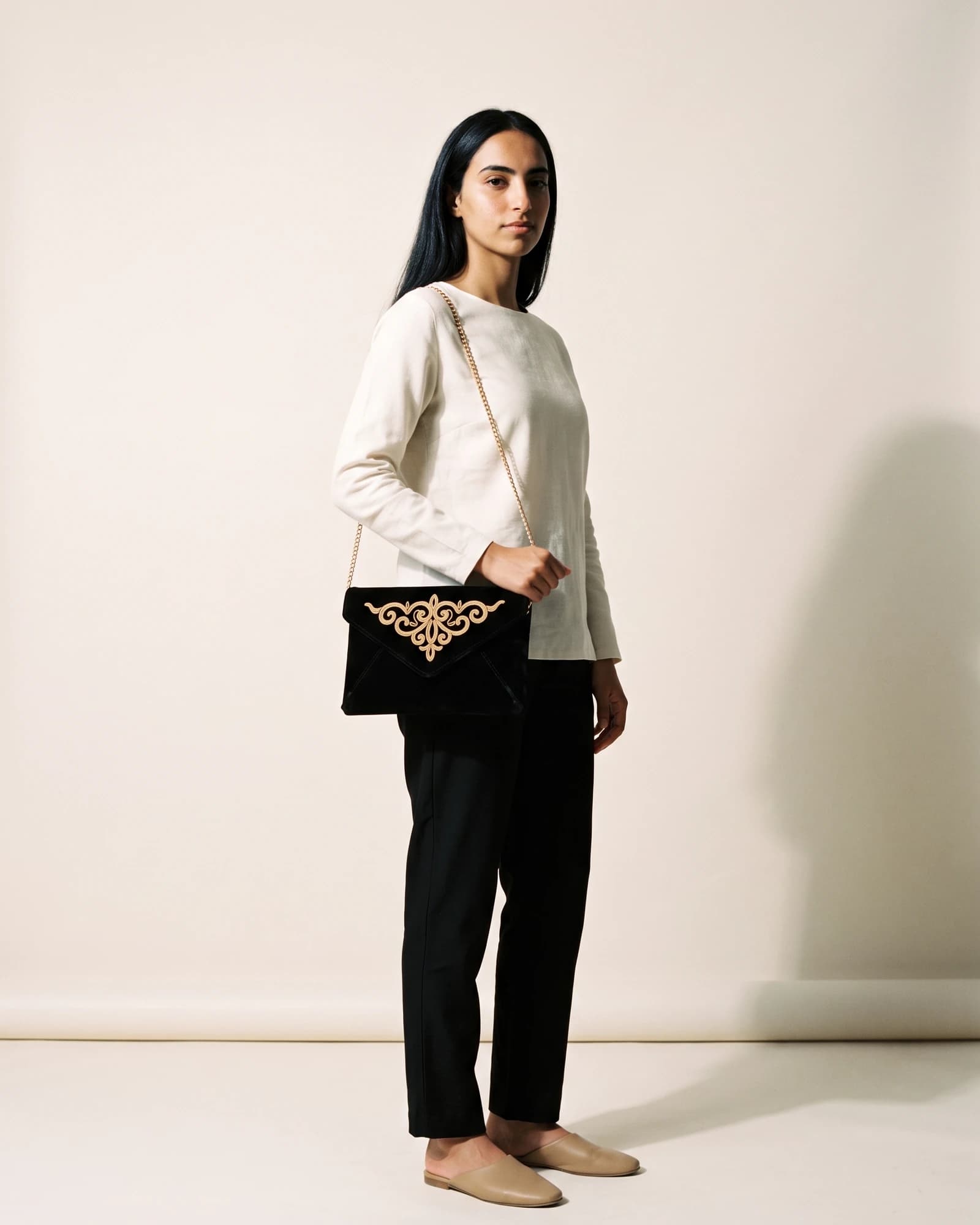
Embroidered velvet clutch
DZD 12,900
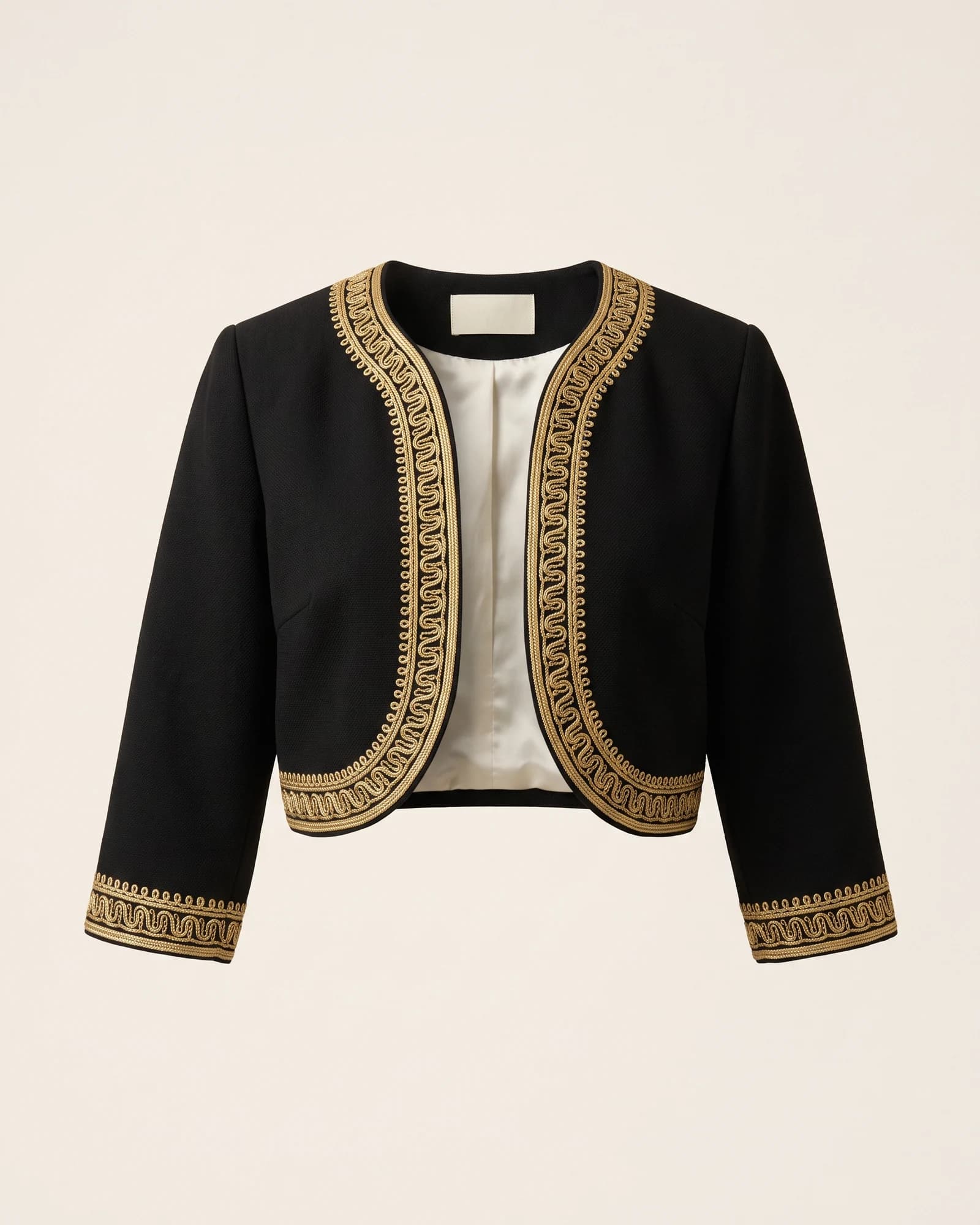
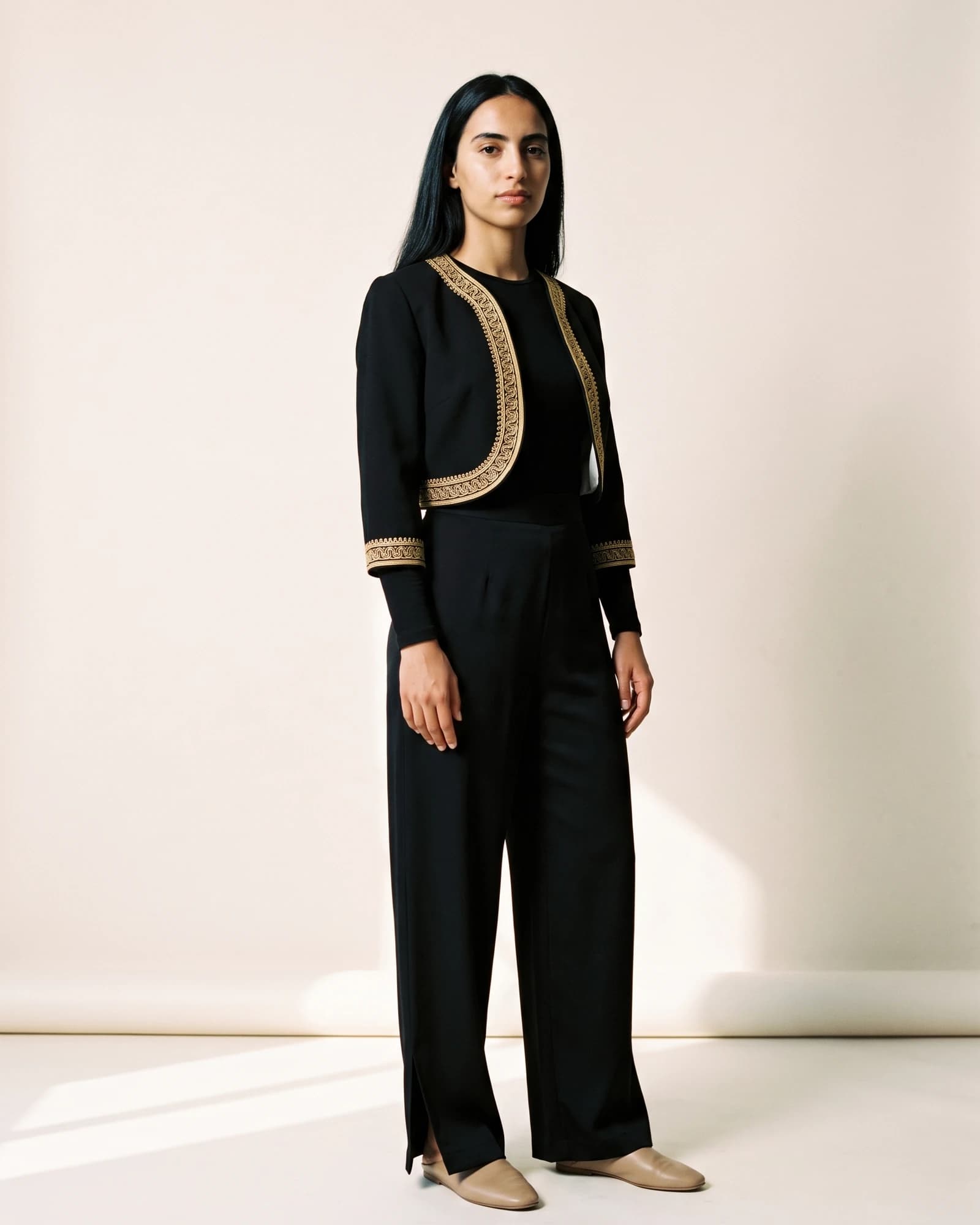
Embroidered crepe bolero after the karakou
DZD 26,900